Pokémon
Satoshi Tajiri spent six years building the first Pokemon game while Game Freak ran out of money. Nintendo published it on the Game Boy in February 1996, on hardware the industry had already written off. Pokemon has since taken in more money than any other entertainment property on earth, films and comics included.
Six years, one dying console, two versions of the same game
Tajiri collected insects as a child and built the game around that: creatures to find, to keep and to swap. The swapping came from the Game Boy link cable, a piece of hardware almost nobody used.
Game Freak nearly folded during development. Shigeru Miyamoto backed the project inside Nintendo, and Ken Sugimori drew the 151 creatures. The Game Boy was seven years old at release.
To make trading necessary, Nintendo shipped two versions with different creatures in each. Buyers needed a second copy or a second player. That decision is still in force thirty years later, from Pokemon Fire Red & Leaf Green to Pokemon Scarlet & Violet.
December 1997: 685 children go to hospital
The anime started in April 1997 and reached Europe and the Americas the following year. On 16 December 1997, an episode called Electric Soldier Porygon used a red and blue strobe effect, and 685 Japanese children were taken to hospital with seizures.
The series stopped for four months. The episode has never aired again anywhere, and Japanese broadcasters adopted flashing-image guidelines that still apply to every anime made today.
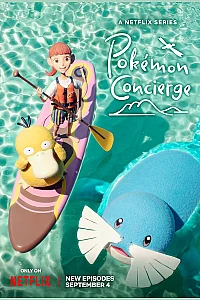
The franchise kept expanding regardless: a trading card game, films, and eventually Pokemon Concierge in 2023, a stop-motion series made for Netflix by a studio with no previous Pokemon work.
Ten million copies in three days, and an apology from Nintendo
Pokemon Scarlet & Violet shipped in November 2022 with frame rates that collapsed and characters falling through scenery. Nintendo apologised publicly. The game sold more than ten million copies in three days.
Pokemon Legends: Arceus, released ten months earlier, had done the opposite: it dropped the structure the series had used since 1996 and was received as the most interesting entry in a decade.
Reviews barely move the numbers here. Most of the franchise's revenue comes from merchandise and cards rather than from the games that generate them.
The pattern Japanese publishers now build first
Pokemon proved a property could be designed from the start to work as a game, a comic, a card set, a series and a toy line at once. Japanese publishers call it media mix, and it is now the default plan rather than a consequence of success.
The two-version model spread beyond Nintendo, and creature collection became a genre with its own hits, from Digimon to Palworld.
Cumulative revenue passed 90 billion dollars, ahead of Hello Kitty, Mickey Mouse and Star Wars. It started with a boy catching beetles in the suburbs of Tokyo.
All works


No work matches this filter.