Metro: Last Light
Metro: Last Light official Release Trailer
Steam, Saints, and Survival: Why Metro: Last Light Still Feels Haunted
There’s a particular kind of silence in Metro: Last Light: the kind that makes your breathing sound like a threat. Released in the wake of the first game, it doubles down on survival tension and turns the post-apocalypse into something more intimate than spectacle. Even players who bounced off earlier shooters tend to remember its moral pressure, because the game keeps asking what kind of survivor you want to be.
The Experience
Metro: Last Light is a third-person and first-person survival shooter set in the ruined tunnels of the Metro beneath Moscow. You play as Artyom, pushing through factions, mutants, and human cruelty, where every lantern glow feels temporary. The core loop is classic but sharply tuned: explore tightly lit corridors, scavenge for limited resources, and choose how you fight, whether that means stealth through darkness or open violence when the cost feels too high. It’s a game about pacing as much as aiming, with stealth, upgrades, and a constant need to manage light, ammo, and fear.
What Sets It Apart
4A Games gives the world its signature texture: dust-muffled pipes, uneven tunnel acoustics, and that sense that the Metro is alive, listening, judging. The game’s presentation leans on atmospheric sound design and a moody audio-visual mood that makes even mundane navigation feel like you’re trespassing in history. Story and mechanics also entwine, with moral choices and consequence-driven combat choices that affect how your journey plays out. In the studio’s catalog, it stands out as the one that most aggressively tests whether a shooter can carry dread and ethics without losing momentum.
Who Should Play This
If you want a shooter with actual atmosphere and meaningful tension, this is for you. Expect moderate difficulty that rewards stealth and preparation, plus a learning curve if you’re new to resource-managed stealth shooting. It’s part of the Metro series, so the prior game helps with context, but you can still jump in; on average, playtime lands in the roughly 10 to 20 hour range depending on how thoroughly you explore. Platforms include PC and consoles, with versions varying by edition and era.
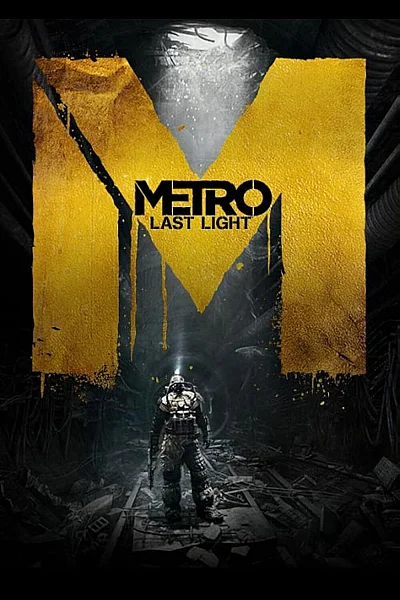
Steam, Saints, and Survival: Why Metro: Last Light Still Feels Haunted
There’s a particular kind of silence in Metro: Last Light: the kind that makes your breathing sound like a threat. Released in the wake of the first game, it doubles down on survival tension and turns the post-apocalypse into something more intimate than spectacle. Even players who bounced off earlier shooters tend to remember its moral pressure, because the game keeps asking what kind of survivor you want to be.
The Experience
Metro: Last Light is a third-person and first-person survival shooter set in the ruined tunnels of the Metro beneath Moscow. You play as Artyom, pushing through factions, mutants, and human cruelty, where every lantern glow feels temporary. The core loop is classic but sharply tuned: explore tightly lit corridors, scavenge for limited resources, and choose how you fight, whether that means stealth through darkness or open violence when the cost feels too high. It’s a game about pacing as much as aiming, with stealth, upgrades, and a constant need to manage light, ammo, and fear.
What Sets It Apart
4A Games gives the world its signature texture: dust-muffled pipes, uneven tunnel acoustics, and that sense that the Metro is alive, listening, judging. The game’s presentation leans on atmospheric sound design and a moody audio-visual mood that makes even mundane navigation feel like you’re trespassing in history. Story and mechanics also entwine, with moral choices and consequence-driven combat choices that affect how your journey plays out. In the studio’s catalog, it stands out as the one that most aggressively tests whether a shooter can carry dread and ethics without losing momentum.
Who Should Play This
If you want a shooter with actual atmosphere and meaningful tension, this is for you. Expect moderate difficulty that rewards stealth and preparation, plus a learning curve if you’re new to resource-managed stealth shooting. It’s part of the Metro series, so the prior game helps with context, but you can still jump in; on average, playtime lands in the roughly 10 to 20 hour range depending on how thoroughly you explore. Platforms include PC and consoles, with versions varying by edition and era.
Also in the Metro universe
See all 4 worksReviews
Login to share your review
One of the most faithful sequels I've played
In many ways, I found myself enjoying this game even more than Metro 2033. For one, it introduced some really memorable characters and placed Artyom in a relationship. This made the stakes feel a little higher. It also had a more compelling story that reminded me of the ending of Ender's Game and the protagonist's ethical quandary after nearly wiping out an entire alien species. But besides those considerations, the gameplay was refined and the graphics and systems felt more modern.
Comments
Log in to join the discussion
No comments yet. Be the first to share your thoughts!
Comments
Log in to join the discussion
No comments yet. Be the first to share your thoughts!