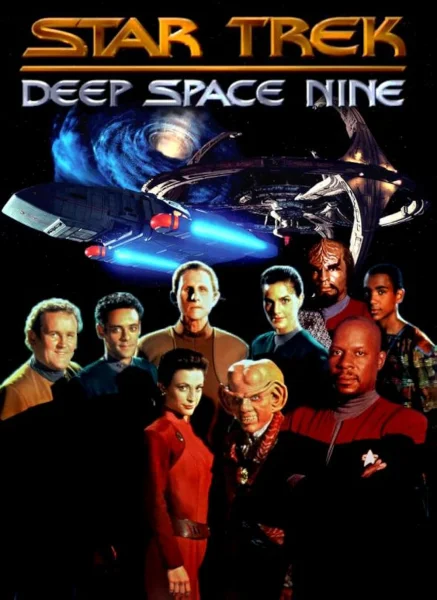
Star Trek: Deep Space Nine

Exploring the Final Frontier: Deep Space Nine's Legacy
In 1993, a new chapter in the Star Trek universe quietly unfolded against a backdrop of evolving television landscapes. "Star Trek: Deep Space Nine" stood apart from its predecessors with a singular setting aboard a static space station. Broadcast during an era crowded with episodic sci-fi, this series dared to engage viewers with serialized storytelling, shaping what would become a hallmark of modern TV dramas.
The Concept
At the heart of "Deep Space Nine" is Commander Benjamin Sisko, portrayed deftly by Avery Brooks. Tasked with overseeing a pivotal space station near the wormhole to the Gamma Quadrant, Sisko navigates political tensions among Bajorans and Cardassians. Season one's narrative orbits around these complex dynamics while introducing us to an eclectic crew, including Nana Visitor as Major Kira and Terry Farrell as Jadzia Dax. Expect moral quandaries wrapped in sci-fi intrigue.
The Series Identity
"Deep Space Nine" breaks from Starfleet's starship mold with its permanent locale set amidst intergalactic crossroads. Its strength lies in richly drawn characters and deeply woven arcs that explore themes like war's morality and religious dogma. The show skillfully contrasts its grounded political drama against "The Next Generation’s" utopian idealism. Often compared to later series like "Battlestar Galactica," it remains distinct for its willingness to tackle darker narratives within Gene Roddenberry's universe.
Viewing Guide
The series spans seven seasons, comprising 176 episodes,each approximately 45 minutes long. Available for streaming on platforms like Paramount+, it's a feast for both Trekkies and newcomers interested in cerebral science fiction with emotional depth. However, potential viewers should brace for occasional '90s production quirks and heavy storylines that might not suit all tastes.
Exploring the Final Frontier: Deep Space Nine's Legacy
In 1993, a new chapter in the Star Trek universe quietly unfolded against a backdrop of evolving television landscapes. "Star Trek: Deep Space Nine" stood apart from its predecessors with a singular setting aboard a static space station. Broadcast during an era crowded with episodic sci-fi, this series dared to engage viewers with serialized storytelling, shaping what would become a hallmark of modern TV dramas.
The Concept
At the heart of "Deep Space Nine" is Commander Benjamin Sisko, portrayed deftly by Avery Brooks. Tasked with overseeing a pivotal space station near the wormhole to the Gamma Quadrant, Sisko navigates political tensions among Bajorans and Cardassians. Season one's narrative orbits around these complex dynamics while introducing us to an eclectic crew, including Nana Visitor as Major Kira and Terry Farrell as Jadzia Dax. Expect moral quandaries wrapped in sci-fi intrigue.
The Series Identity
"Deep Space Nine" breaks from Starfleet's starship mold with its permanent locale set amidst intergalactic crossroads. Its strength lies in richly drawn characters and deeply woven arcs that explore themes like war's morality and religious dogma. The show skillfully contrasts its grounded political drama against "The Next Generation’s" utopian idealism. Often compared to later series like "Battlestar Galactica," it remains distinct for its willingness to tackle darker narratives within Gene Roddenberry's universe.
Viewing Guide
The series spans seven seasons, comprising 176 episodes,each approximately 45 minutes long. Available for streaming on platforms like Paramount+, it's a feast for both Trekkies and newcomers interested in cerebral science fiction with emotional depth. However, potential viewers should brace for occasional '90s production quirks and heavy storylines that might not suit all tastes.
Also in the Star Trek universe
See all 15 works
Reviews
Login to share your review
No reviews yet. Be the first to share your thoughts!