
Merian C. Cooper

Director
Tome
From the editors, by Tome Updated on 18/09/2026

An aviator and documentary filmmaker who decided a giant ape should climb a skyscraper: Merian C. Cooper produced the idea into existence.

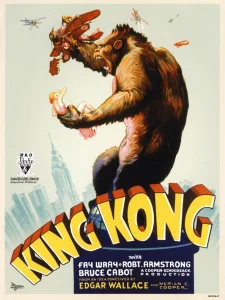
Cooper co-directed and produced King Kong (1933), the film that established the creature feature as a form. He conceived the premise, pushed it through a studio in financial difficulty, and insisted on stop motion animation at a scale nobody had attempted, at a moment when the technique was still largely experimental.

Background and Influences

He was a military pilot who flew in two wars and spent the nineteen twenties making expedition documentaries in remote regions with a regular collaborator, filming migrations and wildlife under genuinely dangerous conditions. That documentary background is why his fantasy film opens as an account of a location expedition, with the fantastic arriving inside a realistic frame.

Style and Themes

Recurring subjects: expedition into places outside the map, showmanship and its costs, and the tension between spectacle and the thing being displayed. His approach was always to sell the impossible through documentary texture, establishing procedure and equipment before revealing anything extraordinary.

Legacy and Influence

The film he conceived is the origin point of the giant creature genre and has been remade and imitated continuously for ninety years. Its final sequence is among the most reproduced images in cinema. He later produced extensively for a major Western director and helped develop widescreen projection processes, receiving an honorary Academy Award for his contribution to the medium.

Who Should Explore Their Work

For viewers interested in where creature cinema begins. Essential for anyone studying practical effects history, and rewarding for those willing to meet an early sound film on its own terms rather than by current standards.

Best movies ranking by Merian C. Cooper

1
Compete in the Heroes' Tournament and win Amazon gift cards! Discover