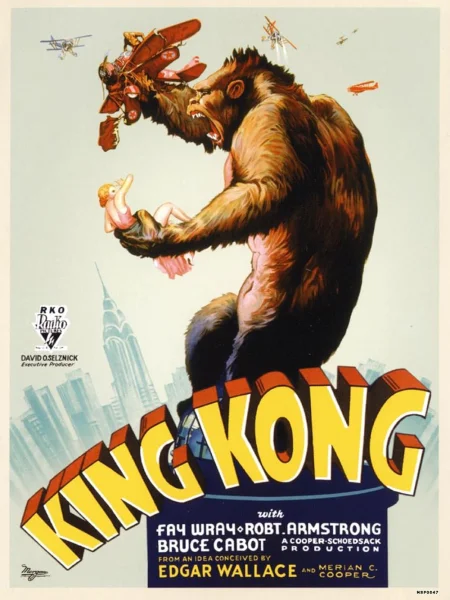
King Kong (1933)

When a Giant Ape Conquered Cinema
In 1933, amidst the Great Depression, a colossal ape emerged from the silver screen to captivate audiences worldwide. King Kong wasn't merely a film; it was an event. Its groundbreaking special effects, led by Willis O'Brien's pioneering stop-motion animation, left viewers in awe and fear. It established new standards for visual storytelling and demonstrated cinema's unbounded capacity for imagination.
The Pitch
Carl Denham, an audacious filmmaker, embarks on a daring expedition to an uncharted island with his leading lady, Ann Darrow. There, they encounter Kong, a massive ape worshipped like a deity by the island's inhabitants. As Denham's desire for spectacle clashes with nature’s raw power, Ann finds herself at the center of a tragic beauty-and-the-beast saga that culminates in one of the most memorable climaxes atop New York's skyscrapers.
Direction and Visual Universe
Merian C. Cooper and Ernest B. Schoedsack, the directors behind this ambitious project, fuse adventure with horror against artful matte paintings and miniatures that create a convincingly surreal world. The film’s score by Max Steiner further intensifies its dramatic impact, intertwining seamlessly with the visual grandeur. Although Fay Wray might not have been a household name before King Kong, her iconic scream secured her place in cinematic history.
Who Should Watch This
This film is essential viewing for lovers of classic cinema and aficionados of special effects evolution. At just over 100 minutes, it's not part of any series but stands as its own monumental achievement. Be mindful of scenes depicting peril and destruction; they're intense even by today's standards but are crucial to appreciating this foundational work that forever changed how we view monsters on screen.
When a Giant Ape Conquered Cinema
In 1933, amidst the Great Depression, a colossal ape emerged from the silver screen to captivate audiences worldwide. King Kong wasn't merely a film; it was an event. Its groundbreaking special effects, led by Willis O'Brien's pioneering stop-motion animation, left viewers in awe and fear. It established new standards for visual storytelling and demonstrated cinema's unbounded capacity for imagination.
The Pitch
Carl Denham, an audacious filmmaker, embarks on a daring expedition to an uncharted island with his leading lady, Ann Darrow. There, they encounter Kong, a massive ape worshipped like a deity by the island's inhabitants. As Denham's desire for spectacle clashes with nature’s raw power, Ann finds herself at the center of a tragic beauty-and-the-beast saga that culminates in one of the most memorable climaxes atop New York's skyscrapers.
Direction and Visual Universe
Merian C. Cooper and Ernest B. Schoedsack, the directors behind this ambitious project, fuse adventure with horror against artful matte paintings and miniatures that create a convincingly surreal world. The film’s score by Max Steiner further intensifies its dramatic impact, intertwining seamlessly with the visual grandeur. Although Fay Wray might not have been a household name before King Kong, her iconic scream secured her place in cinematic history.
Who Should Watch This
This film is essential viewing for lovers of classic cinema and aficionados of special effects evolution. At just over 100 minutes, it's not part of any series but stands as its own monumental achievement. Be mindful of scenes depicting peril and destruction; they're intense even by today's standards but are crucial to appreciating this foundational work that forever changed how we view monsters on screen.
Reviews
Login to share your review
No reviews yet. Be the first to share your thoughts!