
Ernest B. Schoedsack

Director
Tome
From the editors, by Tome Updated on 18/09/2026

A cameraman who filmed real expeditions before staging an imaginary one: Ernest B. Schoedsack brought documentary nerve to fantasy.

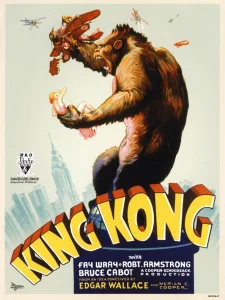
Schoedsack co-directed King Kong (1933), handling much of the live action while his partner drove the production. His contribution is visible in the film's physical texture: the crowded ship, the working procedure of a film crew on location, and action staged with the matter of fact grammar of newsreel rather than of studio fantasy.

Background and Influences

He began as a newsreel and expedition cameraman, working in difficult conditions across Asia and the Middle East, and co-directed a series of documentaries about migration and survival before turning to fiction. That experience gave him an unusual tolerance for logistical complexity and an instinct for filming animals and crowds.

Style and Themes

Recurring subjects: survival in hostile environments, humans measured against forces larger than themselves, and hunting as a moral question. He filmed adventure without romanticism, keeping the camera steady and the framing plain, which is precisely what makes the fantastical elements convincing when they arrive.

Legacy and Influence

His work on the giant ape film helped establish how creature effects should be integrated with live action, a problem he and his collaborators solved through rear projection and miniatures. He also directed a much imitated hunting thriller shot on the same standing sets, and returned to the giant creature form years later on a film whose animation work won an Academy Award.

Who Should Explore Their Work

For viewers curious about the documentary roots of adventure cinema. Suited to anyone studying early effects work, and to those who want to see how location filmmaking discipline made a fantasy premise credible.

Best movies ranking by Ernest B. Schoedsack

1
Compete in the Heroes' Tournament and win Amazon gift cards! Discover