Realm of the Elderlings
Margaret Ogden had been publishing fantasy for fifteen years when she invented a second name to write differently. Robin Hobb was chosen to be ambiguous, and the first book under it opens sixteen novels that punish their narrator more thoroughly than the genre normally allows.
1995: a new name for a different kind of book
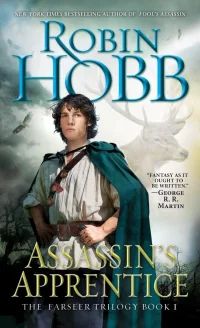
Ogden had written as Megan Lindholm since 1983, in a register closer to urban fantasy. The Farseer trilogy required a first-person voice looking back across decades, and she took a new name rather than confuse readers who knew the other one.
Farseer introduces Fitz, the illegitimate son of a prince, trained as an assassin because a bastard is useful and expendable.
The narration is retrospective throughout. An older Fitz writes the events down, which means the reader knows from the first page that he survives and does not know at what cost.
A hero the books refuse to reward
Most fantasy of the period moved its protagonist toward power. This one moves Fitz toward exhaustion: he is poisoned, beaten, betrayed by people he loves and repeatedly used by the family that will not acknowledge him.
He is not especially good at his profession. He fails, and the consequences hold for books at a time rather than resolving in the next chapter.
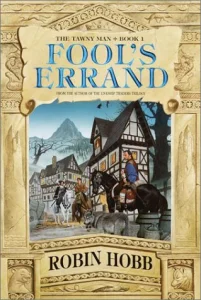
Tawny Man returns to him fifteen years later, older and living alone under another name, and the reunion is written as damage rather than as triumph.
Sixteen novels that answer each other
The full sequence runs to five series between 1995 and 2017, in a single world seen from different coasts. The Liveship Traders sequence leaves Fitz entirely for trading families and sentient ships, and its events reach him three series later.
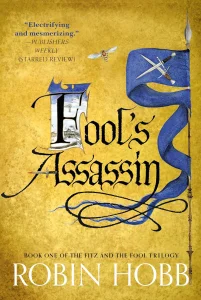
Fitz and the Fool closes the whole arrangement in 2017, twenty-two years after the first volume, resolving a relationship the books had kept unnamed throughout.
Very few fantasy authors have been permitted to plan at that length, and fewer have finished. The sequence has sold more than a million copies in France alone, where it appeared under a different title structure entirely.
Why other writers keep citing it
George R. R. Martin has said the books are diamonds in a sea of zircons. Robin Hobb's influence sits mainly in the writing of interior life: the series spends its pages on grief, obligation and animals, and almost none on armies.
The bond between Fitz and his wolf is the emotional structure of the whole sequence, and it produced a small industry of imitations.
The books are also a demonstration that a genre built on wish fulfilment can carry a protagonist who is denied nearly everything he wants and still sell for thirty years.
All works
No work matches this filter.