Final Fantasy
The title announced an ending. Hironobu Sakaguchi has said he would have left the industry if the 1987 game had failed, and Square was in no better shape than he was. It sold, and the series has since restarted from nothing with every numbered entry, which should be commercially impossible.
1987: a title chosen by a man planning to quit
Sakaguchi wanted a two-word title abbreviating to FF. The first word came from his own position: this was to be his last attempt at making games.
The game sold four hundred thousand copies in Japan and kept Square in business. Sakaguchi stayed for another fifteen years.
The decision that shaped everything came next: each sequel would drop the world, the cast and the systems and build new ones. Only a handful of names carry over, and they are furniture rather than characters.
1997: a Japanese role-playing game becomes a global format
Final Fantasy VII moved to the PlayStation, to three dimensions and to a marketing budget larger than the development one. It sold more than thirteen million copies and made Japanese role-playing games a category Western publishers had to answer.
The series then spent two decades testing how far the reset could go: a real-time strategy entry, two direct sequels, an online game and a film that nearly closed the company in 2001.
Final Fantasy XIV is the strangest case. It launched so badly in 2010 that Square shut it down, rebuilt it from nothing and released it again in 2013. No other publisher has destroyed and rebuilt a live game at that scale.
Remaking the one game everyone remembers
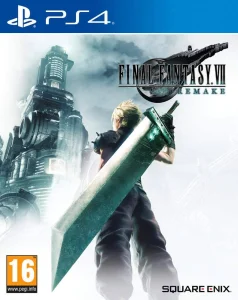
Final Fantasy VII Remake arrived in 2020 covering the first five hours of the 1997 game across a full-length release, and it changes the story on purpose rather than by accident.
That choice divides the audience precisely along the line the series has always drawn: those who want the memory preserved, and those who accept that this series treats its own past as material.
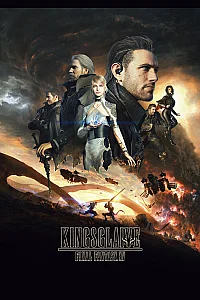
Kingsglaive : Final Fantasy XV, a computer-animated film released in 2016, ran the same logic in the other direction by telling events the game assumes you already know.
Fifteen years of development habits the industry copied
Final Fantasy normalised the pre-rendered cinematic, then the voiced role-playing game, then the summer of delays: Final Fantasy XV took ten years and changed its name and its director on the way.
The reset principle is the real inheritance. A series that keeps its title and discards everything else can survive its own failures, because a bad entry does not contaminate the next one.
What actually carries from one game to the next is a short list of objects: crystals, large yellow birds called chocobos, and an engineer named Cid who is a different person every time.
All works
No work matches this filter.