Blade Runner
Philip K. Dick died four months before the film opened. He had seen twenty minutes of effects footage and told the producers it matched what had been in his head while writing, which is a rarer verdict from an author than the industry usually admits.
1968: a novel about a man who cannot afford a real sheep
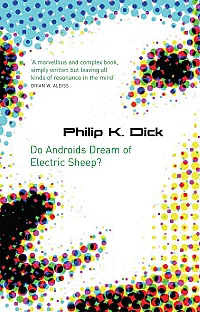
Do Androids Dream of Electric Sheep? is about status. Owning a living animal is the marker of a decent life after an ecological collapse, and the protagonist hunts androids to pay for one.
Empathy is the test that separates human from machine, and the novel keeps suggesting that the humans fail it too. Dick wrote it in 1968, in six weeks, for very little money.
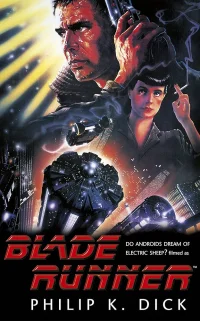
The film keeps the hunter and the androids and drops the sheep, the wife and the religion. What it takes instead is the atmosphere, which Dick recognised immediately.
A film that failed and then would not go away
Blade Runner opened in June 1982 against E.T. and lost. Reviews were mixed, the studio had imposed a voiceover and a happy ending, and Ridley Scott spent a decade disowning the released version.
It took about 33 million dollars against a 28 million budget, which at the time meant a loss. Home video kept it alive. A director's cut appeared in 1992 and a final cut in 2007, each removing the narration and restoring an ambiguity about the protagonist that the theatrical release had closed.
The look did the rest: rain, neon, Japanese advertising, a city with no sky. Almost every screen depiction of a future city since has quoted it, and the word cyberpunk attached itself to this image rather than to the books that named it.
Thirty-five years later, a sequel nobody expected to be good
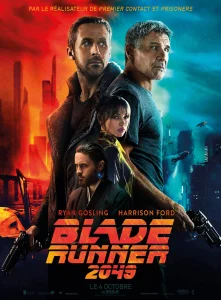
Blade Runner 2049 arrived in 2017 with Denis Villeneuve directing and Roger Deakins shooting, and it was received as a rare sequel that justifies itself.
It lost money. On a budget near 150 million dollars it took about 260 million, which after marketing is a failure, and it repeated the commercial position of the original exactly.
Both films are now considered essential and both underperformed. That pattern is specific: this material attracts admiration from people who did not buy a ticket in the first weekend.
The question the films refuse to answer
Whether Deckard is himself a replicant is left open in the original novel, closed by the theatrical cut, reopened by the director's cut and deliberately unresolved in 2049.
Scott has said he is. Harrison Ford has said he is not. The films have been arranged so that both remain defensible, which is why the argument has run for forty years without resolution.
Dick's actual subject was narrower and harder: not whether the machines are people, but whether the people are.
All works
No work matches this filter.