X-Men
Marvel almost cancelled the comic in 1970. It ran on reprints for five years, and the relaunch that saved it in 1975 replaced nearly every character with foreigners, which turned a failing teen title into the company's argument about prejudice.
1975: a team assembled from outside the United States
The original 1963 line-up was five American teenagers. Sales did not hold, and the book spent 1970 to 1975 publishing old issues with new covers.
Len Wein and Dave Cockrum restarted it with a German, a Kenyan, a Russian, a Canadian and a Japanese character. Chris Claremont then wrote the series for sixteen consecutive years, which remains one of the longest runs on a single title in the industry.
The book became Marvel's best seller within a decade. The metaphor sharpened as it went: mutants are born different, feared by the public, and argue among themselves about whether to integrate or to fight.
The animated series taught the metaphor to television
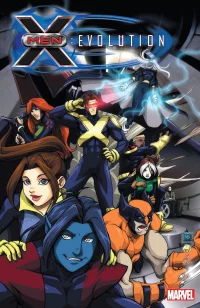
X-Men: Evolution recast the team as high school students in 2000 and ran four seasons, aimed younger than the comics and willing to keep the politics.
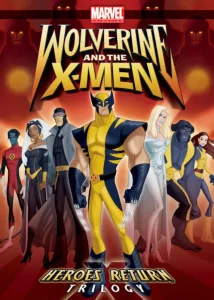
Wolverine and the X-Men followed in 2008 with a darker structure: the school is destroyed in the first episode and the series works backwards from a future where mutants are interned.
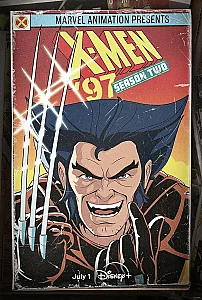
Both were cancelled with stories unfinished. X-Men '97 arrived in 2024 as a direct continuation of the 1992 series, picking up a plot thread that had been dangling for twenty-seven years.
The films arrived before Marvel knew what it had
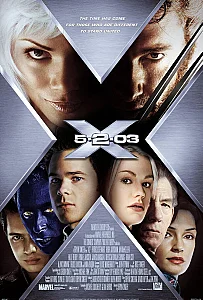
X-Men opened in 2000, two years before Spider-Man, and established that superhero films could be made straight rather than camp. X-2: X-Men United improved on it in 2003 with a plot about a government registry.
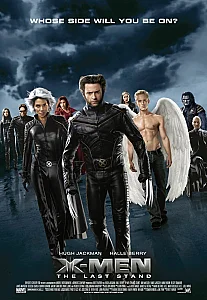
X-Men: The Last Stand closed that trilogy in 2006 around a cure for mutation, a premise the comics had used to ask whether a difference should be treated as an illness.
Fox held the film rights for nineteen years, which is why the characters were absent from the Marvel films for a decade despite being Marvel's most valuable property in the 1990s.
A metaphor that keeps being reassigned
Claremont wrote the mutants as an analogy for antisemitism and the civil rights movement. Readers have since applied it to sexuality, disability and immigration, and the comics have accommodated all of them.
That elasticity is unusual and slightly suspect: a metaphor that fits every group precisely fits none of them. The strongest stories name their subject, as when Magneto's number tattoo places him in Auschwitz.
The X-Men remain the only superhero team whose central conflict is not with a villain but between two positions on how to survive being hated.
All works

No work matches this filter.