The Maze Runner
James Dashner wrote the first book in six weeks after waking up with the image of a maze. The Maze Runner sold on a structure the genre had not used: the characters know nothing, the reader knows nothing, and the explanation is withheld for an entire novel.
2009: a novel that refuses to explain itself
A boy arrives in a walled glade with no memory and a group of other boys who have organised themselves. The maze outside changes every night.
The boys have invented their own vocabulary, which the book never translates. Dashner keeps the reader at the characters' level throughout. There is no wider view, no adult perspective, no chapter from the organisation running the experiment.
The series has sold more than 14 million copies. It was published into a market already carrying two large dystopias for young readers, and it separated itself by being a puzzle rather than a rebellion.
Three films in four years
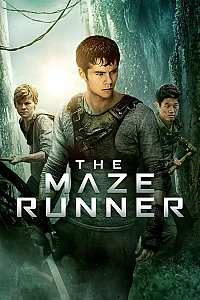
The Maze Runner reached cinemas in 2014 with Wes Ball directing and a budget of 34 million dollars, low for the genre. It took more than 340 million.
Maze Runner: The Scorch Trials followed in 2015, leaving the maze for a desert and losing the structural idea that had made the first work.
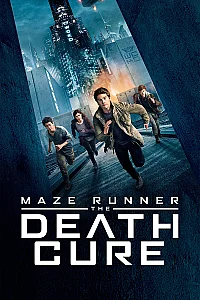
Maze Runner: The Death Cure was delayed a year after Dylan O'Brien was seriously injured on set, and closed the trilogy in 2018. The three films took more than 900 million dollars together.
The genre it arrived at the end of
Between 2012 and 2016, studios adapted every young adult dystopia they could option. Divergent, The 5th Wave, The Darkest Minds and others were announced as trilogies and most were not completed.
These three films were finished, which puts them in a small minority. The commercial reason is the budget: at 34 million dollars the first film needed a fraction of what its competitors did.
Wes Ball went on to direct a Planet of the Apes film, which is the usual career path this cycle offered its directors. By 2018 the cycle was over. Studios had discovered that a young adult property does not automatically transfer, and the successful ones had specific reasons that could not be copied.
What withholding information costs and pays
The first book works because nothing is explained. The sequels have to explain, and the series spends two volumes answering questions that were more interesting unanswered.
That trap is structural rather than a failure of execution. A mystery premise commits the author to a solution, and a solution is almost always smaller than the question.
Dashner later wrote two prequels covering the material the trilogy had skipped, which is the same trade made a third time. A television series was announced in 2024, restarting from the first book.
All works

No work matches this filter.