The Matrix
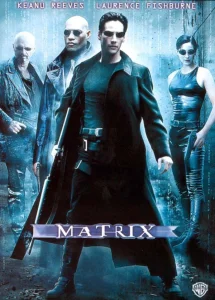
The film's authors said what it was about twenty years after making it. Lilly Wachowski confirmed in 2020 that The Matrix had been written as an allegory of transition, which reframed a 1999 action film that a great many people had already decided was about something else.
1999: 63 million dollars and a camera trick nobody had seen
The Wachowskis had made one film before this. Warner gave them 63 million dollars, and the result took 465 million.
John Gaeta built the effect that carried it: 120 still cameras fired in sequence around an actor, producing a shot that moves through a frozen moment. Bullet time was in advertising within a year and parodied in Shrek by 2001.
The film also won four Academy Awards, including editing and sound, beating a Star Wars prequel in every technical category it shared with it. The rest of the design has aged better than the trick. A world rendered in green text, telephones as exits, and a fight sequence choreographed by Yuen Woo-ping, who had never worked on an American production.
Two sequels shot at once, released six months apart
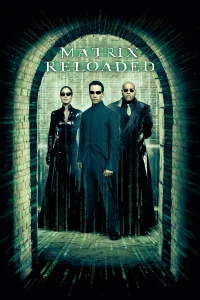
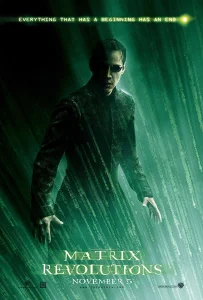
The Matrix Reloaded and Matrix Revolutions were filmed as one production and released in May and November 2003. Together they took more than a billion dollars and lost most of the goodwill.
The complaints were consistent: too much explanation, too many minutes of a machine city, and a philosophy that had worked as suggestion turning into dialogue.
Reloaded still holds the highest single-day opening of its year, which is the gap between how a film performs and how it is remembered.
Matrix Resurrections argues with its own studio
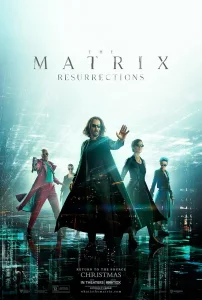
Lana Wachowski made the fourth film alone in 2021, and its first act is about a company forcing a reluctant creator to revive a property. Warner had made clear it would proceed with or without her.
Critics split. The film underperformed, having opened on a streaming service on the same day, during a pandemic winter.
Whatever else it is, it is one of very few blockbusters whose text is an argument against its own existence, made by the person contractually required to produce it.
An allegory that hid in plain sight
The reading the authors have confirmed is visible once named: a character living under a name that is not his, a doctor who offers a pill, a body that does not match the self.
The film's imagery was meanwhile adopted by online movements arguing something close to the opposite, and the word for waking up became a political slogan in several countries.
Both Wachowskis have since transitioned. The film they made in 1999 said so, and the audience took twenty years to hear it.
All works
No work matches this filter.