The Hunger Games
Suzanne Collins writes only when she has something to argue about, and each book states its subject: the first three are about war as entertainment, the fourth about propaganda, the fifth about obedience. She has published five novels in seventeen years and refuses to write to a schedule.
2008: reality television and a war documentary, seen in sequence
Collins has described the origin as channel-surfing between a competition programme and coverage of the invasion of Iraq, until the two blurred.
Her father served in Vietnam and taught her about war as a subject rather than a setting. The trilogy is unusually explicit that the arena is a broadcast, and that the audience is complicit.
The books sold more than 100 million copies and were criticised in the same years for the violence they depict, which is the same argument the story makes about its own spectators.
The prequels arrive when Collins has a point to make
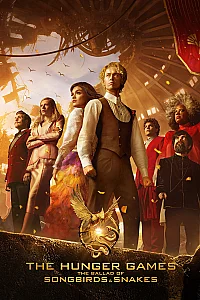
The Ballad of Songbirds and Snakes appeared in 2020, twelve years after the first book, following the man who becomes the dictator as a poor student who chooses power.
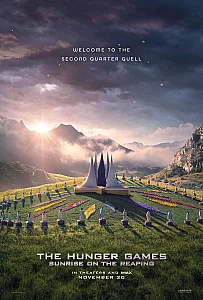
The Ballad of Songbirds and Snakes sold more than half a million copies in its first week. Sunrise on the Reaping followed in 2025, set twenty-four years before the trilogy, built around the manipulation of a public record.
Collins gives interviews rarely and has said each time that she writes when she has something to say. In an industry that treats a successful series as an annual obligation, that is close to unheard of.
A film series that helped build a genre and then buried it
The four films from 2012 to 2015 took nearly three billion dollars and started a decade of adaptations of young adult dystopias. Most of the imitators lost money.
The Hunger Games: The Ballad of Songbirds & Snakes returned in 2023, and The Hunger Games: Sunrise on the Reaping is set for 2026.
Jennifer Lawrence was 21 at the first release and the highest-paid actress in the world by the last. Splitting the final book into two films became standard practice after these, and it is the decision the studios copied most eagerly and defended least well.
A salute that left the cinema
The three-finger salute is invented in the books as a gesture of mourning and resistance. Protesters in Thailand adopted it after the 2014 coup, and it appeared again in Myanmar in 2021 and in Hong Kong.
Thai authorities arrested people for making it. A gesture written for a children's book became evidence of dissent in a real prosecution.
Collins argues that a story about spectacle should be uncomfortable to consume. The salute is the point where her subject left the page and became the thing itself.
All works
No work matches this filter.