The Expanse
The setting was built for a role-playing game that a handful of people played around a table. Ty Franck, then working as George R. R. Martin's assistant, had designed a solar system for his players; Daniel Abraham joined him to write it as novels, and the physics they refused to break became the reason the story works.
Ships that have to slow down
The books keep Newton. A vessel accelerates for half a journey and decelerates for the other half, so travel between planets takes weeks and everyone knows exactly when a fleet will arrive.
That single constraint produces the politics. Earth, Mars and the asteroid belt cannot reach each other quickly, so they negotiate, blockade and starve each other rather than meet in battle.
Bodies grown in low gravity are tall and brittle. Belters cannot walk on Earth without harm, which turns a physical fact into a caste system nobody had to invent.
Nine novels and a pseudonym for two people
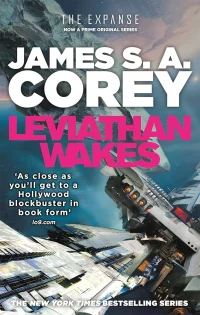
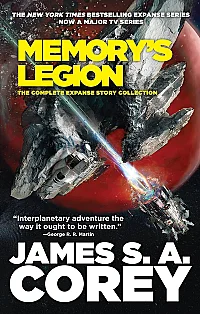
The Expanse appeared in 2011 under the name James S. A. Corey, assembled from the authors' middle names. Nine novels followed, finishing in 2021 on the schedule announced at the start.
The structure alternates: each book adds viewpoint characters and drops others, and the series jumps thirty years forward between the sixth and seventh.
The setting began as a tabletop campaign, then as a design document for a massively multiplayer game that was never built. Abraham and Franck wrote in alternating chapters, each taking specific characters, which is unusual for a collaboration at this length.
Cancelled by one network, bought by a customer
SyFy ended the television adaptation in 2018 after three seasons, having only held first-run rights, which made the audience it reached worthless to it.
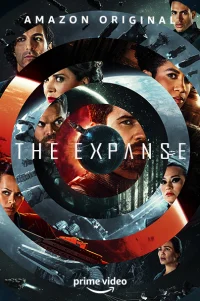
Readers ran a campaign, including an aircraft towing a banner over Amazon Studios. Amazon bought it within six weeks. Jeff Bezos announced it himself at a conference, and the show ran three more seasons, adapting six of the nine books.
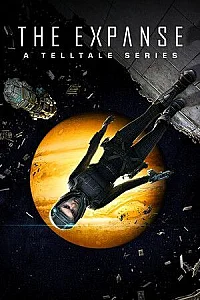
The Expanse: A Telltale Series arrived in 2023 as a separate story set on a ship the novels never mention, made with the show's cast.
What hard science fiction gained by being watchable
Television had treated orbital mechanics as an obstacle. This adaptation showed a burn as violence against the human body, with characters strapped down and injected with drugs to survive their own acceleration.
The visual grammar has spread. Later productions borrow the magnetic boots, the spinning stations and the silence of vacuum, which had been confined to a handful of films before.
The novels won a Hugo Award for the series as a whole in 2020. The lesson they leave is narrow and useful: an audience will accept a rule it does not understand, provided the story never breaks it.
All works
No work matches this filter.