Ready Player One
Steven Spielberg had to remove his own films from the adaptation. Ready Player One is built almost entirely from references to 1980s culture, a large share of it his, and he cut most of them on the grounds that a director quoting himself is not the same thing as a novel quoting him.
2011: a novel made of other people's property
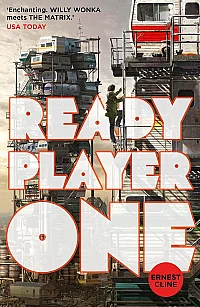
Ernest Cline wrote a treasure hunt inside a virtual world where the clues are films, games and songs from the 1980s. The plot depends on the reader recognising them.
The book sold well immediately and film rights went within days of publication. The premise is unusually difficult to license: every reference is owned by someone.
The book has sold several million copies and is set in 2045. Warner spent years clearing rights, and several major items in the novel could not be obtained, which forced substitutions the film never explains.
The adaptation removes its own director
The novel's central sequence takes place inside a Spielberg film. He replaced it with a sequence inside The Shining, having decided that using his own work would read as vanity.
Other changes are structural. The book's contests are trivia questions, and trivia does not film; the adaptation converts them into races and physical puzzles.
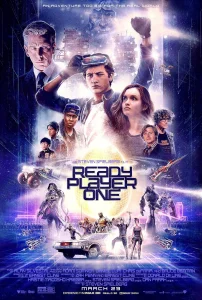
It took nearly 600 million dollars in 2018 and reviewed better than the book had, which is uncommon for an adaptation of a bestseller.
An argument about whether nostalgia is content
The novel divides readers precisely on the question of whether recognising something is the same as being told something. Its defenders read it as an adventure; its critics count the references and note that the emotional payload is carried by the reader's own memories.
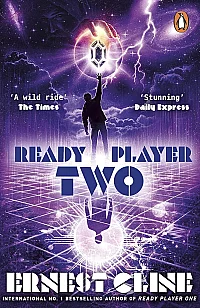
Ready Player Two arrived in 2020 with the same method and a worse reception. Reviewers who had tolerated the first book generally did not tolerate the second.
A third book was announced in 2024. The argument the first two started is now a standing one in the industry, and it applies well beyond these books: a great deal of what is produced today asks the audience to supply the feeling.
What it predicted and what it missed
The novel describes a single commercial virtual world that people work, study and socialise inside, run by a corporation whose control of it is a political problem. Several companies have since tried to build exactly that.
What it did not anticipate is that people would decline. The commercial metaverse projects launched after 2018 have mostly failed to hold users, and the working virtual worlds that exist are games rather than platforms.
A book about escaping into a corporate simulation has been overtaken by an audience that preferred not to.
All works
No work matches this filter.