Justice League
The animated series solved a problem the films spent twenty years failing at: how to put seven characters of unequal power in one story without wasting five of them. Justice League ran from 2001, expanded its cast to more than fifty, and is still the version most readers point to.
2001: a team assembled by people who had already done Batman
Bruce Timm and Paul Dini had made Batman: The Animated Series and Superman. Justice League used the same production and the same house style, which meant the characters arrived already established.
The structure was two-part episodes, giving each story roughly forty minutes, enough for a plot that needs seven people rather than one.
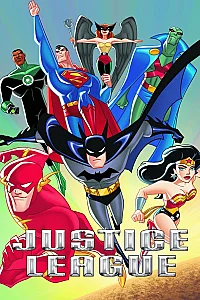
The team included Wonder Woman, Martian Manhunter, Hawkgirl, Green Lantern and the Flash alongside the two leads, and the writing gave the less famous half the better material. Hawkgirl carries the series' longest arc, and she had been a minor character for sixty years.
Justice League Unlimited opens the roster
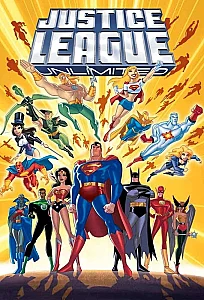
The 2004 continuation moved to standalone episodes and a cast of more than fifty, drawing on characters DC had not used on screen in decades.
Its final seasons run a plot about a government that fears the team and builds a response to it, which is the story superhero films would arrive at years later.
It ended in 2006 after Cartoon Network declined further seasons, with an episode that closes the entire continuity Timm and Dini had built since 1992.
The direct-to-video films that kept the format alive
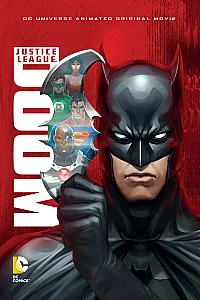
Justice League: Doom arrived in 2012, adapting a comic in which Batman's contingency plans for defeating his own team are stolen and used.
These films are made cheaply, released without cinema distribution, and have been consistently better reviewed than the studio's live-action productions of the same years.
Doom was one of the last projects Dwayne McDuffie wrote before his death in 2011. Warner has released more than fifty of these films. They are the most reliable adaptation pipeline the company operates and receive almost no promotion.
The comparison nobody at the studio wanted
The 2017 live-action film was reshot by a second director, released at two hours, and then re-released in 2021 at four hours in the first director's version after a public campaign.
Both cuts were measured against the animated series by reviewers and readers, and both lost. The animation had the advantage of eight years of prior work establishing every character.
That is the actual lesson, and it is a structural one: an ensemble works when the audience already knows the ensemble, and there is no way to buy that with a budget.
All works
No work matches this filter.