Jurassic Park
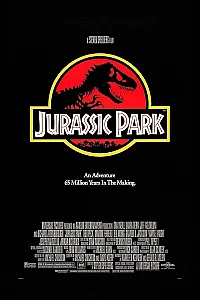
Steven Spielberg bought the film rights to Michael Crichton's novel in 1990, before it reached bookshops. The film he made three years later convinced the industry that computer images could carry a live-action shot, and it fixed a picture of dinosaurs that palaeontology has been contradicting ever since.
The dinosaurs were supposed to be puppets
Jurassic Park was planned with stop-motion animation by Phil Tippett and full-size animatronics by Stan Winston. Industrial Light and Magic ran an unrequested test of a computer-generated skeleton walking, and Spielberg changed the plan.
The final film contains about six minutes of computer imagery against nine of animatronics. Tippett stayed on to supervise the animators, having lost the technique he was hired for.
Crichton wrote the first draft of the screenplay himself, having sold the rights for 1.5 million dollars plus a fee for the adaptation. The film took 914 million dollars in 1993 and held the box office record until Titanic four years later.
Feathers, and a franchise that decided against them
The raptors in the film are far larger than the real Velociraptor, which stood about knee height; the design borrowed from Deinonychus instead. Within a decade, fossil evidence had established that both were feathered.
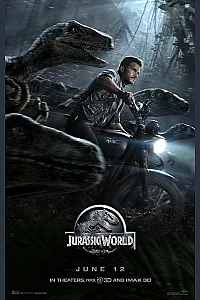
The films never changed. Colin Trevorrow stated plainly in 2015 that Jurassic World would use no feathers, on the grounds that these are movie monsters rather than reconstructions.
The choice is defensible and it has a cost: for thirty years, the most widely seen image of a dinosaur has been one science had already abandoned.
Each sequel earns more and reviews worse
The Lost World: Jurassic Park in 1997 and Jurassic Park III in 2001 divided audiences, then the series stopped for fourteen years. Jurassic World brought it back in 2015 and took 1.6 billion dollars.
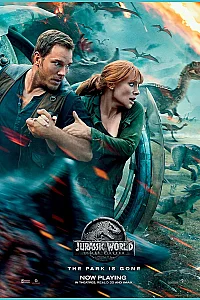
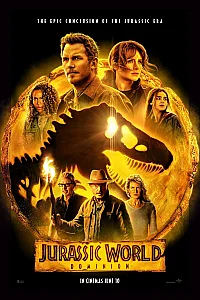
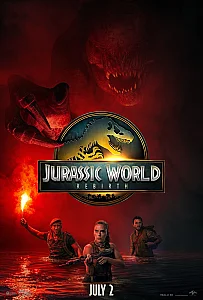
Jurassic World: Fallen Kingdom followed in 2018 and moved the animals off the island, which changed the premise from a park that fails to a world that has to live with them. Jurassic World Dominion closed that trilogy in 2022 with 38 on Metacritic, the worst score in the franchise, and roughly a billion dollars in tickets. Jurassic World Rebirth followed in 2025.
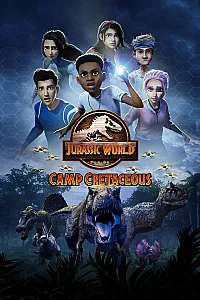
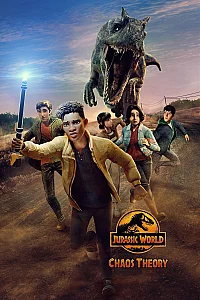
Netflix meanwhile built an audience the films never targeted, with Jurassic World Camp Cretaceous and Jurassic World Chaos Theory as animated series aimed at children.
The film that made computer images believable
Before 1993, computer imagery meant liquid metal and glowing surfaces. Jurassic Park applied it to skin, muscle and weight in daylight, and every studio revised its plans.
Pixar was working on Toy Story at the time, and the industry's confidence in what a computer could render shifted in a single summer.
Crichton's novel is a warning about scientists who do not stop to ask whether they should. The franchise it produced has spent three decades demonstrating the same reflex with visual effects budgets.
All works
No work matches this filter.