Fate
There is no agreed order to watch it in. The Fate franchise began as a visual novel with three branching routes, each adapted separately, by different studios, out of sequence and across fifteen years. The mobile game that now funds all of it has taken more than six billion dollars.
A visual novel with three incompatible endings
Type-Moon released Fate/stay night in 2004, written by Kinoko Nasu with art by Takashi Takeuchi. The company had been a self-publishing group two years earlier.
The premise is a tournament: seven mages summon seven historical or mythological figures and fight for a wish. King Arthur is a young woman, which was the detail that made the property famous.
The novel contains three routes with different endings, different antagonists and different meanings. A reader is expected to play all three, in order, over roughly sixty hours.
Each route adapted by a different studio, in the wrong order
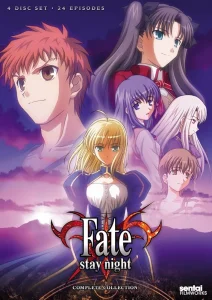
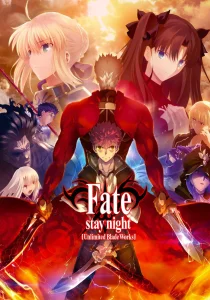
Studio Deen adapted the first route as Fate/stay night in 2006. Ufotable adapted the second as Fate/stay night: Unlimited Blade Works in 2014, and the third as three films between 2017 and 2020.
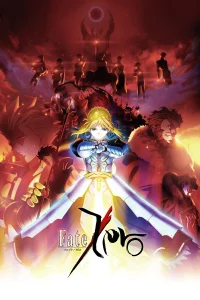
Between them came Fate/Zero in 2011, a prequel novel by Gen Urobuchi adapted by ufotable, which is where most people outside Japan started because it is the only entry that works without prior knowledge.
Fate/Zero was written to be read after the visual novel, not before it. Starting there also spoils the identity of a character the original conceals for forty hours. Every recommended viewing order published online trades one problem for the other.
A mobile game pays for everything
Fate/Grand Order launched in 2015 as a free game that sells random chances at characters. It has taken more than six billion dollars and was for several years the highest-earning mobile game in Japan.
That revenue funds the animation. The films and series are, in commercial terms, advertising for a gacha game, which is the reverse of how anime franchises normally work.
It also explains the volume. More than thirty separate Fate productions exist, including spin-offs where the characters run a hot spring or fight in a magical girl parody.
What a branching source does to a franchise
Most adaptations pick one version of a story. This one adapted all three, kept them all official, and left the audience to reconcile them.
The approach only works because the fiction contains a mechanism for it: parallel timelines are part of the premise, so contradictions are canon rather than errors.
The cost is an entry barrier that the franchise has never solved. It is one of the largest properties in Japan and the standard advice for a newcomer is still a flowchart.
All works
No work matches this filter.