Doctor Who
The first episode went out the day after John Kennedy was shot, and the BBC repeated it the following week because nobody had watched. The series has since run for more than sixty years on a device invented to replace a sick actor: the main character can change his face.
1963: an educational programme with a police box
The BBC commissioned Doctor Who to teach children history and science between a sports results programme and a pop music show. The time machine was meant to deliver them to real events.
The second serial introduced the Daleks against the explicit wishes of the producer, who considered monsters a betrayal of the brief. The audience trebled within a month.
By 1965 the Daleks were on lunchboxes and in two feature films. The police box exterior was a budget decision: the ship was supposed to change shape, and the production could not afford a new prop each week.
An actor's illness becomes the reason the series never ends
William Hartnell was too ill to continue in 1966. Rather than recast quietly, the production wrote the change into the fiction: the character regenerates into a different body, with a different personality.
Fifteen actors have now played the part. Each brings a different manner, and the audience treats its own preferred version as the correct one, which the format encourages rather than resolves.
The device also permits total renewal of the writing. No other continuing drama can replace its lead, its tone and its supporting cast without a break in continuity.
Cancelled in 1989, revived in 2005 by people who grew up with it
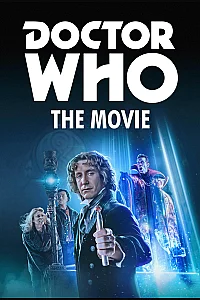
The BBC ended the series in 1989 after ratings collapsed. Doctor Who: The Movie, a co-production with Fox, tried to restart it in 1996 for an American audience and failed to secure a series.
Russell T Davies brought it back in 2005 with a structure built for modern television: one story per episode, a season-long arc, and an emotional register the original avoided.
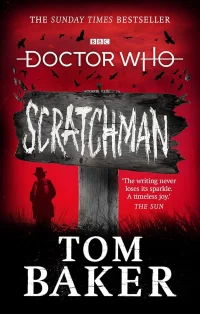
The revival made it a global export for the first time. Tom Baker, who played the part from 1974 to 1981, wrote Doctor Who: Scratchman as a novel in 2019 from a film script rejected forty years earlier.
Ninety-seven missing episodes
The BBC wiped its own archive in the 1970s to reuse the tape. Ninety-seven episodes from the 1960s no longer exist in any broadcast-quality form.
Fans had recorded the audio at home by pointing microphones at their television sets, and those recordings are now the basis of the animated reconstructions the BBC sells.
An institution destroyed its own history, and the people watching preserved what they could with domestic equipment. The archive that exists today is largely theirs.
All works
No work matches this filter.