Cosmere
In 2022, four surprise novels raised 41.7 million dollars on Kickstarter, the largest sum the platform has ever taken for anything. Brandon Sanderson had written them during a pandemic without telling his publisher. They belong to the Cosmere, a single universe he designed before he had sold a single book.
Thirteen unpublished novels, then a planned universe
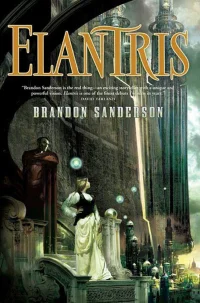
Sanderson wrote thirteen novels before anyone bought one. Elantris, published in 2005, was the sixth of them.
The design work had already happened. The Cosmere is a shared cosmology in which every magic system draws on the same underlying substance, and separate series occur on separate planets within it. Elantris, Mistborn and The Stormlight Archive are three of those planets.
Elantris is a standalone about a city whose inhabitants were once gods. Mistborn is a trilogy about overthrowing one. Readers can take any series alone. Those who read all of them find characters crossing between books that have no other connection, which is the reward for noticing.
Magic with published rules
Sanderson wrote out what he called the laws of magic, the first being that a writer's ability to resolve a conflict with magic is proportional to how well the reader understands it.
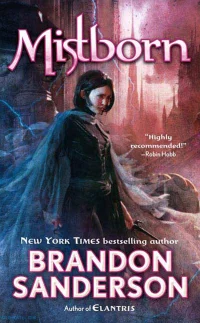
Mistborn applies that literally in 2006: metals are swallowed and burned, each producing one specific effect, and the plot is a heist built on those constraints. Nothing is solved by an unexplained power.
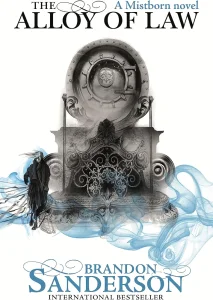
Wax and Wayne moved the same world forward three centuries in 2011, into an industrial age where the magic has been studied and turned into equipment.
The Stormlight Archive, and a schedule readers cannot keep up with
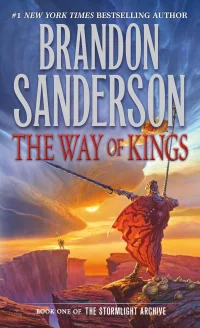
The Stormlight Archive began in 2010 and runs to ten planned volumes averaging over a thousand pages. Five have appeared, the fifth in December 2024, and the series is designed to break in half after the fifth with a gap of several in-world years.
Sanderson also finished The Wheel of Time for Robert Jordan's estate after Jordan died in 2007, writing three volumes on someone else's plan while continuing his own.
His output is now a running joke among his own readers, and it is also the reason the Kickstarter worked: the audience believed the books already existed, because they usually do.
A business that skips the publisher
The 2022 campaign proved a novelist with a direct audience does not need a publishing house for distribution, only for the parts he chooses to keep.
Sanderson runs a company that handles printing, shipping and merchandise, and he has said publicly what each part of a book contract is worth to him.
Fantasy publishing has spent fifty years telling authors that scale requires an imprint. One writer with a spreadsheet and a cosmology demonstrated otherwise in thirty days.
All works
No work matches this filter.