Back to the Future
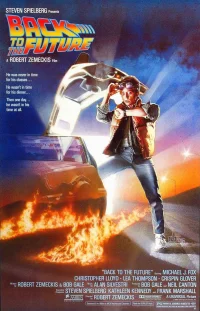
Forty-four studios rejected the script. The objection was consistent: a comedy in which a teenager's mother falls in love with him was either too tame for the rude market or too indecent for the family one. It became the highest-grossing film of 1985.
A script nobody would buy for four years
Robert Zemeckis and Bob Gale wrote it in 1980. Disney passed on the grounds of incest; the studios chasing teen comedies passed because it had no nudity.
Zemeckis needed a hit before anyone would finance it, and got one with Romancing the Stone in 1984. Universal then bought the script it had already refused.
Back to the Future opened in July 1985 and took 380 million dollars, more than any other release that year. It cost 19 million.
Five weeks of filming thrown away
Eric Stoltz was cast as Marty and shot for five weeks before Zemeckis concluded the performance was too serious for the comedy.
Michael J. Fox had been the first choice all along but was contracted to a television series whose producer refused to release him. The production filmed him at night and on weekends for three months while he worked on Family Ties during the day.
Reshooting cost about three million dollars on a nineteen-million-dollar production, which the studio approved rather than release the version it had. Footage of Stoltz still exists and is included on the disc releases.
Two sequels shot together, and a future that arrived
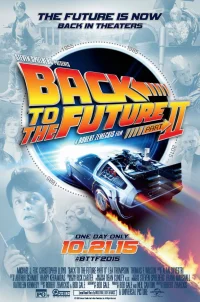
Back to the Future Part II and Back to the Future Part III were filmed back to back and released in 1989 and 1990. The second is a time-travel structure that revisits the first film from inside itself, which almost no mainstream comedy had attempted.
Its 2015 sequence became a recurring news item as the real date approached, and October 2015 produced a global wave of coverage measuring the predictions against reality.
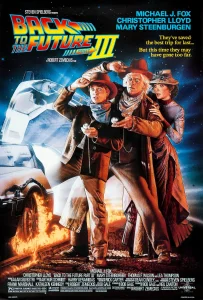
The third moves to a western, which is the same reset the series had used twice before: same characters, different genre, identical structure. The three films together took more than a billion dollars.
Why there is no fourth film
Zemeckis and Gale hold the rights jointly and have refused every offer, including a remake. Gale has said publicly that there will be no fourth film while either of them is alive.
Their stated reason is that the story is finished and that Michael J. Fox's Parkinson's diagnosis makes recasting the part unacceptable to them. That position is close to unique in an industry where nearly every property from the 1980s has been revived. The trilogy has instead gone to the stage, as a musical running in London and on tour.
A script rejected forty-four times became a franchise its owners actively protect from continuation.
All works
No work matches this filter.