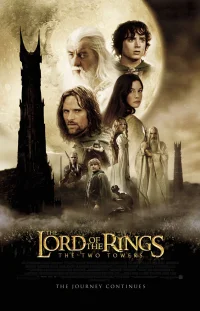
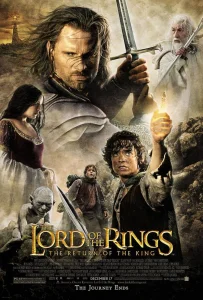

It's fantastic in its own way
The game is more or less like the lord of the rings
15
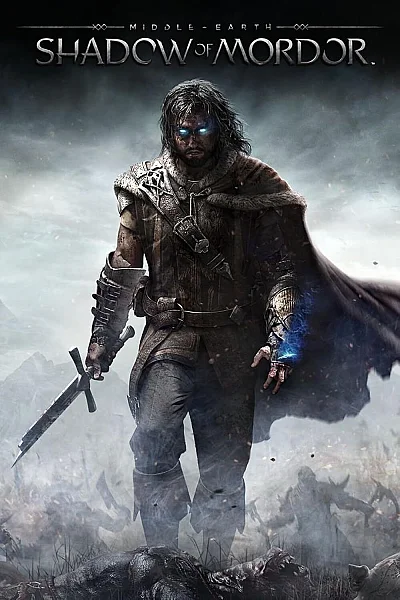

Middle Earth: Shadow of Mordor video game trailer

There’s a specific kind of thrill in watching a fantasy world react to you like it’s alive. Middle-earth: Shadow of Mordor turns Tolkien’s geography into a playground of grudges, executions, and escalating legend-making, which is why it still gets quoted in the same breath as the stealth-and-scaling games that followed.
It also landed at the perfect cultural moment: people wanted open-world freedom without losing the tight rhythm of a combat system. The result is a game that feels less like “role-playing” and more like a personal myth machine.
You play as Talion, a ranger whose body keeps moving even when the rest of him has stopped agreeing with the universe. When a supernatural force bonds him to vengeance, you get a power fantasy built around infiltration, counter-kills, and a brutal form of detective work: identify a target, learn their weaknesses, then rewrite the enemy hierarchy by removing key threats.
The gameplay loop clicks fast. You stalk captains, exploit patterns, and chain abilities to turn a normal patrol into a cascade of chaos. Then the world “remembers” your actions through a nemesis-style system, so betrayals and grudges don’t just decorate the story, they generate new threats and different outcomes.
Its art direction sells grit. Mordor looks like it has been sandblasted by centuries of violence, and the contrast between harsh landscapes and sharp character silhouettes makes every stealth attempt feel readable.
The soundtrack leans into cinematic weight without drowning the player, while the writing focuses on momentum: short exchanges, clear objectives, and villains that feel like threats rather than lore footnotes. More importantly, the technical achievement is the system design: the nemesis idea turns narrative into gameplay, not the other way around.
It also anchors a studio identity. Developed by Monolith Productions, it helped define a modern action-stealth lane where open worlds and social rivalries collide.
If you like stealth with teeth, combat you can learn fast, and enemy personalities that evolve, this is your kind of Middle-earth. Expect around 20 to 30 hours for a focused playthrough, longer if you hunt upgrades and experiment.
It’s available on PC, PlayStation, and Xbox. Difficulty scales from approachable to punishing, but you do not need previous entries as a prerequisite. The game is part of a series, and it directly builds on the franchise’s action momentum.
There’s a specific kind of thrill in watching a fantasy world react to you like it’s alive. Middle-earth: Shadow of Mordor turns Tolkien’s geography into a playground of grudges, executions, and escalating legend-making, which is why it still gets quoted in the same breath as the stealth-and-scaling games that followed.
It also landed at the perfect cultural moment: people wanted open-world freedom without losing the tight rhythm of a combat system. The result is a game that feels less like “role-playing” and more like a personal myth machine.
You play as Talion, a ranger whose body keeps moving even when the rest of him has stopped agreeing with the universe. When a supernatural force bonds him to vengeance, you get a power fantasy built around infiltration, counter-kills, and a brutal form of detective work: identify a target, learn their weaknesses, then rewrite the enemy hierarchy by removing key threats.
The gameplay loop clicks fast. You stalk captains, exploit patterns, and chain abilities to turn a normal patrol into a cascade of chaos. Then the world “remembers” your actions through a nemesis-style system, so betrayals and grudges don’t just decorate the story, they generate new threats and different outcomes.
Its art direction sells grit. Mordor looks like it has been sandblasted by centuries of violence, and the contrast between harsh landscapes and sharp character silhouettes makes every stealth attempt feel readable.
The soundtrack leans into cinematic weight without drowning the player, while the writing focuses on momentum: short exchanges, clear objectives, and villains that feel like threats rather than lore footnotes. More importantly, the technical achievement is the system design: the nemesis idea turns narrative into gameplay, not the other way around.
It also anchors a studio identity. Developed by Monolith Productions, it helped define a modern action-stealth lane where open worlds and social rivalries collide.
If you like stealth with teeth, combat you can learn fast, and enemy personalities that evolve, this is your kind of Middle-earth. Expect around 20 to 30 hours for a focused playthrough, longer if you hunt upgrades and experiment.
It’s available on PC, PlayStation, and Xbox. Difficulty scales from approachable to punishing, but you do not need previous entries as a prerequisite. The game is part of a series, and it directly builds on the franchise’s action momentum.
Login to share your review

Log in to join the discussion
No comments yet. Be the first to share your thoughts!
Comments (1)
Log in to join the discussion