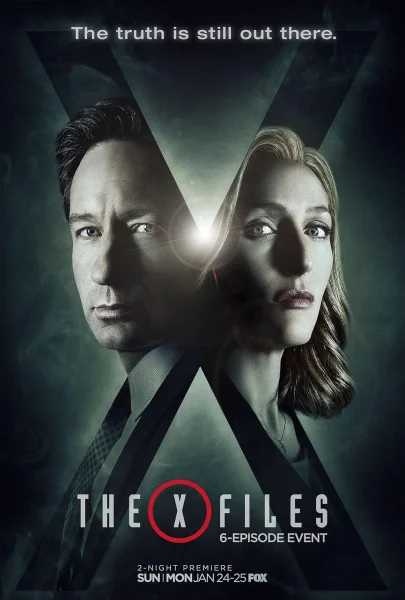
The X-Files

Trailer HD

Cold Cases for the Conspiracy-Neon Era
The X-Files didn’t just go hunting for aliens. It taught an entire TV audience how to feel suspicious of the ordinary. Premiering in the early broadcast-scarcity years and running through the cable of pop culture, it turned late-night unease into a repeatable viewing habit.
Its real production flex is that it balances procedural engine with myth-lore, so each episode can stand alone while still feeding a larger paranoia. That trick is harder than it sounds, but the series makes it feel effortless.
The Concept
Agent Fox Mulder and Agent Dana Scully take cases others dismiss, then keep digging when the evidence starts to look like a personal attack from reality. Mulder leans into the supernatural and the conspiratorial, while Scully brings skepticism, science, and a stubborn refusal to handwave what doesn’t add up. Season 1 establishes their partnership as both a professional alliance and an emotional pressure system, where belief and doubt exchange bruises. The tone stays taut: one foot in the dark of the unknown, the other foot in the fluorescent realism of federal bureaucracy.
The Series Identity
What sets the series apart is its writing that treats fear like a craft, not a gimmick. It stages dread with crisp procedural structure, then lets the mythology seep in through subtext, symbols, and recurring questions that never fully behave. Casting matters here: David Duchovny plays Mulder with an ache that feels private, not theatrical, while Gillian Anderson makes Scully’s reason and empathy land with equal weight. The show’s legacy also ripples through later conspiracy TV, but it remains distinct from cleaner “mystery of the week” formats because it keeps widening the conspiracy’s moral shadow.
Viewing Guide
The series has 11 seasons and originally ran from 1993 to 2002, with later revival seasons. Episodes typically run about 45 minutes, which makes it ideal for bingeing without losing the weekly ritual feel. Platform availability varies by region, but it’s frequently found via major streaming services and rental options; check your local listings. It’s best for viewers who like eerie, sometimes disturbing investigations, and who can handle stories that play with paranoia and institutional dread.
Cold Cases for the Conspiracy-Neon Era
The X-Files didn’t just go hunting for aliens. It taught an entire TV audience how to feel suspicious of the ordinary. Premiering in the early broadcast-scarcity years and running through the cable of pop culture, it turned late-night unease into a repeatable viewing habit.
Its real production flex is that it balances procedural engine with myth-lore, so each episode can stand alone while still feeding a larger paranoia. That trick is harder than it sounds, but the series makes it feel effortless.
The Concept
Agent Fox Mulder and Agent Dana Scully take cases others dismiss, then keep digging when the evidence starts to look like a personal attack from reality. Mulder leans into the supernatural and the conspiratorial, while Scully brings skepticism, science, and a stubborn refusal to handwave what doesn’t add up. Season 1 establishes their partnership as both a professional alliance and an emotional pressure system, where belief and doubt exchange bruises. The tone stays taut: one foot in the dark of the unknown, the other foot in the fluorescent realism of federal bureaucracy.
The Series Identity
What sets the series apart is its writing that treats fear like a craft, not a gimmick. It stages dread with crisp procedural structure, then lets the mythology seep in through subtext, symbols, and recurring questions that never fully behave. Casting matters here: David Duchovny plays Mulder with an ache that feels private, not theatrical, while Gillian Anderson makes Scully’s reason and empathy land with equal weight. The show’s legacy also ripples through later conspiracy TV, but it remains distinct from cleaner “mystery of the week” formats because it keeps widening the conspiracy’s moral shadow.
Viewing Guide
The series has 11 seasons and originally ran from 1993 to 2002, with later revival seasons. Episodes typically run about 45 minutes, which makes it ideal for bingeing without losing the weekly ritual feel. Platform availability varies by region, but it’s frequently found via major streaming services and rental options; check your local listings. It’s best for viewers who like eerie, sometimes disturbing investigations, and who can handle stories that play with paranoia and institutional dread.
Reviews
Login to share your review
No reviews yet. Be the first to share your thoughts!
