
Kohei Horikoshi

Author Illustrator
Tome
From the editors, by Tome Updated on 20/01/2026

In a world where powers are ordinary, being born without one is the interesting problem: Kohei Horikoshi builds from that premise.

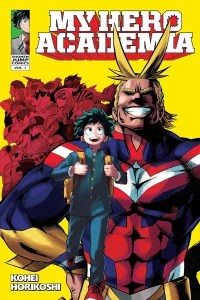
My Hero Academia puts superheroes through a school system, complete with entrance exams, licences and internships. Horikoshi treats heroism as a profession with paperwork and liability, which gives the action stakes beyond winning a fight. The cast is large and unusually well served, with classmates who keep their own goals instead of orbiting the protagonist.

Background and Influences

American superhero comics are an open influence, visible in costume logic and in the readable, high contrast page design. He combines that with the ensemble structure of school based manga, so that side characters get arcs rather than cameos, and a class of twenty stays legible.

Style and Themes

Recurring themes are inheritance, the gap between public image and private cost, and what a society owes the people it asks to save it. Fights are staged around a decision rather than around escalation, and injuries accumulate instead of resetting. His villains argue a position, and the story lets the argument stand rather than dismissing it.

Legacy and Influence

The series brought superhero storytelling into mainstream shonen on its own terms and became one of the defining titles of its generation, with an animated adaptation that widened its reach considerably in western markets.

Who Should Explore Their Work

For readers who like ensemble casts, school settings and superhero logic taken seriously rather than parodied. A good entry point for readers coming from western comics, and for anyone who wants earnestness without irony.

Best manga ranking by Kohei Horikoshi

1
Compete in the Heroes' Tournament and win Amazon gift cards! Discover