
From the editors, by Tome Updated on 08/04/2026 Alien Contact, Human Scale: The Movie That Turns Wonder into Proof
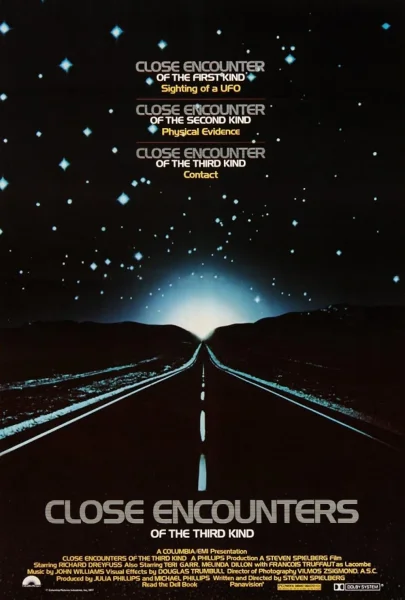
There is a particular kind of hush right before the world changes. In Close Encounters of the Third Kind, Spielberg nails it with scenes that feel less like “sci-fi action” and more like a slow atmospheric pressure drop. The film arrived in the 1970s as a mainstream event, and it still plays like a UFO legend that learned how to breathe, then started speaking in music.
The Pitch
Roy Neary, a working family man, hears something he cannot explain: the sound of a signal that feels stitched into his life. When other people across the country begin noticing matching strange patterns, the mystery stops being personal and becomes communal, then urgent. Meanwhile, a team of scientists and military personnel tries to translate clues that refuse to stay rational. The stakes tighten around a simple question: if we finally receive contact, can we respond with understanding instead of panic?
Direction and Visual Universe
Spielberg builds the visual universe like a documentary haunted by miracles. The camera lingers on faces, on suburban rooms, on ordinary objects suddenly reclassified as evidence, and that choice keeps the wonder grounded. The film’s art direction favors tactile details over gimmicks, and the atmosphere changes with lighting the way weather does. It also has a signature in sound: John Williams turns melody into a language, so the movie’s visuals and emotions feel synchronized rather than merely accompanied.
Who Should Watch This
Watch it if you like big-hearted science fiction, eerie suspense without gore, and stories where belief has consequences. The runtime is about 138 minutes, and it stands alone without needing any prerequisite entries, though it belongs to the broader culture of 1970s UFO obsession. Expect mild tense moments and suspense around military operations, but the film keeps its intensity mostly in the realm of longing and dread.


Comments
Log in to join the discussion
No comments yet. Be the first to share your thoughts!