
From the editors, by Tome Updated on 24/04/2026 Predicting Crime: "Minority Report" Explores the Ethics of Future Justice
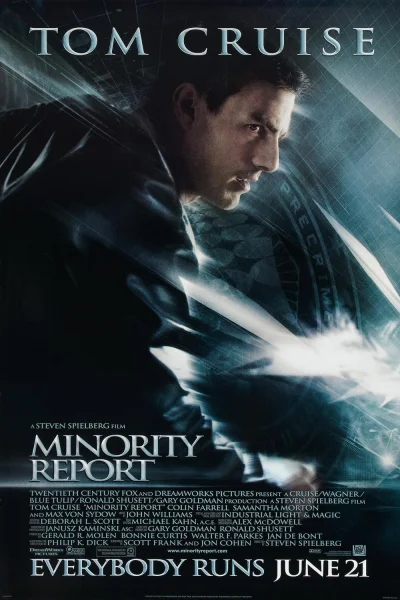
Released in 2002, "Minority Report" landed in theaters with a splash, blending futuristic technology with a classic film noir feel. The movie presents a thrilling exploration of freedom versus security that remains eerily prescient today. As director Steven Spielberg imagined it, this was less about predicting crime and more about examining moral ambiguities.
The Pitch
In Washington D.C., a specialized police department known as PreCrime arrests criminals based on foreknowledge provided by three psychics called "Precogs." Their predictively perfect system faces an unthinkable challenge when Chief John Anderton, played by Tom Cruise, is himself accused of a future murder. What follows is an intense race against time, as Anderton seeks to prove his innocence and unravel the truth behind the seemingly infallible system.
Direction and Visual Universe
Spielberg's signature craftsmanship shines through in every frame, offering an immersive visual experience that feels both futuristic and grounded. The stark contrast between the sleek, high-tech world and its gritty underbelly forms a unique aesthetic that captivates the audience. With contributions from cinematographer Janusz Kamiński and composer John Williams, the film employs shadow and light to weave a tense narrative atmosphere. Featuring stars like Colin Farrell, the cast brings depth to this story of foreboding choices.
Who Should Watch This
This film is perfect for those who relish thought-provoking science fiction mixed with action-packed sequences. With a runtime of 145 minutes, it's an engaging dive into ethical dilemmas set within a meticulously crafted universe. While not part of any franchise, "Minority Report" stands alone as a work that challenges its viewers to ponder deeper questions about autonomy and morality in an age dominated by data.


Comments
Log in to join the discussion
No comments yet. Be the first to share your thoughts!