

Translated from French
A UFO
I discovered Evangelion a very long time ago. You don't understand everything, the biblical references sometimes escape me, but it's really a unique manga that deserves you giving it a chance.
10

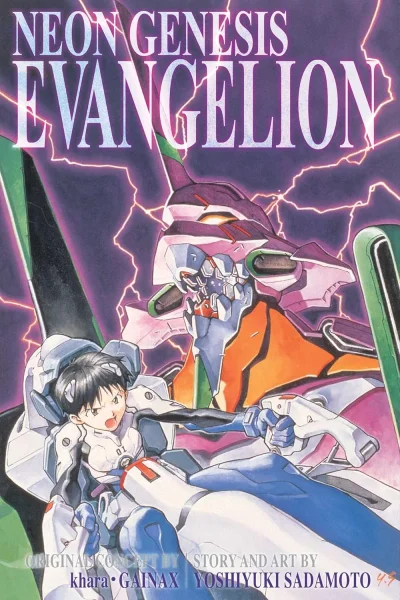
In the shadowy landscape of Tokyo-3, gigantic entities known as Angels threaten human existence. Now imagine being a teenager navigating not just adolescence but also the cockpit of a bio-mechanical giant. Yoshiyuki Sadamoto weaves this enigmatic tale in his 1994 manga, "Neon Genesis Evangelion," echoing a discordant symphony of science fiction and self-discovery. It is the quintessential blend that still haunts pop culture discussions worldwide.
The narrative follows Shinji Ikari, a reluctant 14-year-old pilot thrust into the turmoil of battling monstrous Angels with mechas called EVAs. As he grapples with both external enemies and internal demons, familial ties become a battlefield of their own. The series balances intense mecha action with psychological introspection, creating an experience that oscillates between ethereal drama and dynamic conflict.
Sadamoto's artistic style is unmistakably sleek, employing sharp lines and somber tones to underscore the apocalyptic setting. His panel layouts invite readers into a fluid dance between frenetic battles and pensive character studies. Influenced by early mecha classics yet subverting them at every turn, Sadamoto crafts visual contrasts that blur the line between machine and emotion. The manga paved the way for its celebrated anime adaptation, which has since become iconic.
This is for those drawn to psychological depth wrapped in sci-fi grandeur. With mature themes and bouts of violence, it speaks directly to fans aged teen to adult who are willing to question the nature of heroism itself across its ten compelling volumes. Be warned,this isn't mere escapism; it's an invitation to ponder what truly makes us human.
In the shadowy landscape of Tokyo-3, gigantic entities known as Angels threaten human existence. Now imagine being a teenager navigating not just adolescence but also the cockpit of a bio-mechanical giant. Yoshiyuki Sadamoto weaves this enigmatic tale in his 1994 manga, "Neon Genesis Evangelion," echoing a discordant symphony of science fiction and self-discovery. It is the quintessential blend that still haunts pop culture discussions worldwide.
The narrative follows Shinji Ikari, a reluctant 14-year-old pilot thrust into the turmoil of battling monstrous Angels with mechas called EVAs. As he grapples with both external enemies and internal demons, familial ties become a battlefield of their own. The series balances intense mecha action with psychological introspection, creating an experience that oscillates between ethereal drama and dynamic conflict.
Sadamoto's artistic style is unmistakably sleek, employing sharp lines and somber tones to underscore the apocalyptic setting. His panel layouts invite readers into a fluid dance between frenetic battles and pensive character studies. Influenced by early mecha classics yet subverting them at every turn, Sadamoto crafts visual contrasts that blur the line between machine and emotion. The manga paved the way for its celebrated anime adaptation, which has since become iconic.
This is for those drawn to psychological depth wrapped in sci-fi grandeur. With mature themes and bouts of violence, it speaks directly to fans aged teen to adult who are willing to question the nature of heroism itself across its ten compelling volumes. Be warned,this isn't mere escapism; it's an invitation to ponder what truly makes us human.
 Buy on Amazon
 Login to share your review
Comments
Log in to join the discussion
No comments yet. Be the first to share your thoughts!