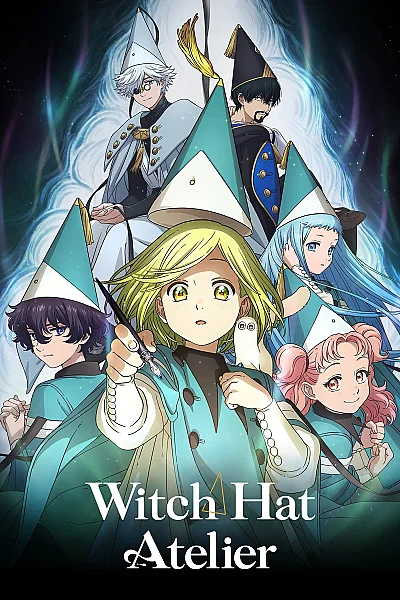


What Makes Witch Hat Atelier Any Different From Other Magic Anime?
Put a finger down if you’ve watched an anime where the protagonist gets transported to a fantasy world, or is born into one with no special power, until they somehow acquire said power and end up joining a school to learn how to control it.
We’ve had no shortage of similar tropes over the years, with the likes of Hunter x Hunter, My Hero Academia, Mashle, and Black Clover dominating the screen as some major fan-favorites.
At first glance, Kamome Shirahama’s Witch Hat Atelier seems to be cut from the same cloth.
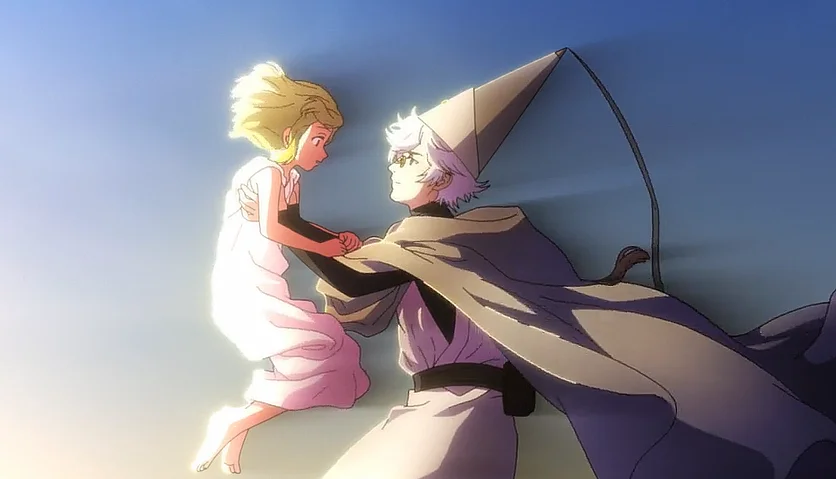
The story follows Coco, a seamstress’s daughter who dreams of becoming a witch. When Coco meets Qifrey, a mysterious traveling magician, she discovers the secret behind how magic actually works, completely changing her life and worldview. Qifrey takes Coco in as an apprentice at his atelier, where she begins practicing magic alongside other young witches.
The anime adaptation, which premiered on Crunchyroll on April 6, is quickly winning over even the most scrutinizing fans of the manga.
Newer fans, meanwhile, keep comparing it to Mushishi and Frieren, or even Kiki’s Delivery Service by Studio Ghibli.
I understand the comparison has more to do with “the vibe” of the anime than the plot itself, but as a new fan myself, I think it flattens what makes Witch Hat Atelier its own thing.
Before I go deeper into the story narrative, let’s first take a look at the visuals.
Though I haven’t yet had the chance to read the manga, I have flipped through its pages and was completely starstruck by Shirahama’s art. Every single panel feels worthy of some version of the Louvre, so it’s no wonder established fans were worried about whether the anime adaptation could measure up.
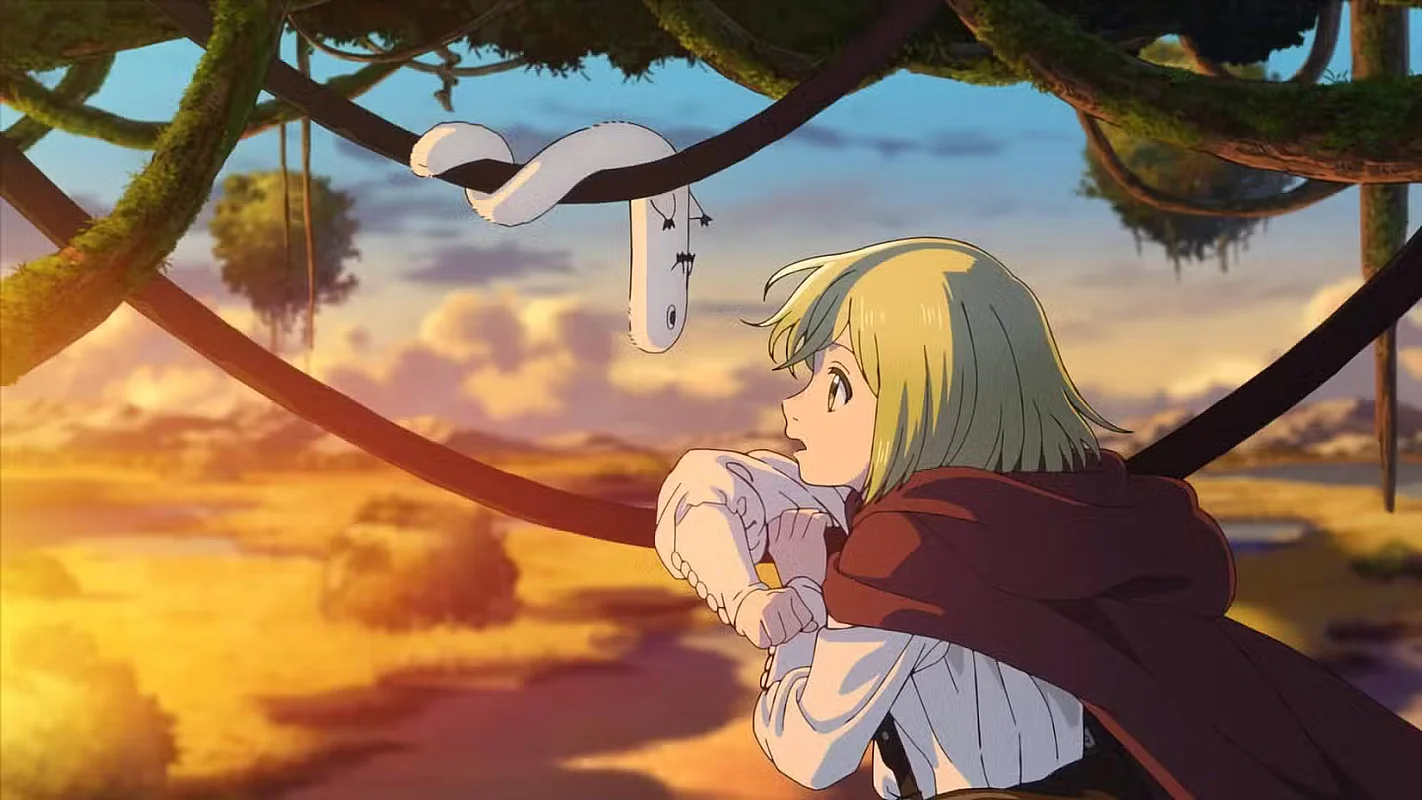
Thankfully, Bug Films delivered by staying as faithful as possible to the original art style while using hand-drawn 2D animation and 3D CGI, without overdoing the latter. We all know how poorly executed CGI (callback to the notorious 2016-2017 anime adaptation of Berserk) tends to make an anime almost unwatchable. So the studio seems to have avoided that risk by a mile.
On a side note, anime-watchers who prefer more mature-looking characters might not get into the show as easily, given that the main cast largely comprises diminutive, childlike characters.
That said, I now want to examine what makes Witch Hat Atelier land so differently from other stories with a similar setup.
Magic Requires the Hand of a Surgeon and the Patience of an Artist
A less creative mangaka may have made the magic system as predictable as possible… Magic is either innate, inherited, or cast through spoken incantations, as is usually seen in magic anime. Coco could have had dormant witch powers passed down from her ancestors, or she could have picked up a few incantations from Qifrey and started casting them on people.
Instead, we are thrust into a world where magic is secret knowledge that anyone can learn, given the right (or wrong) circumstances to make it accessible.
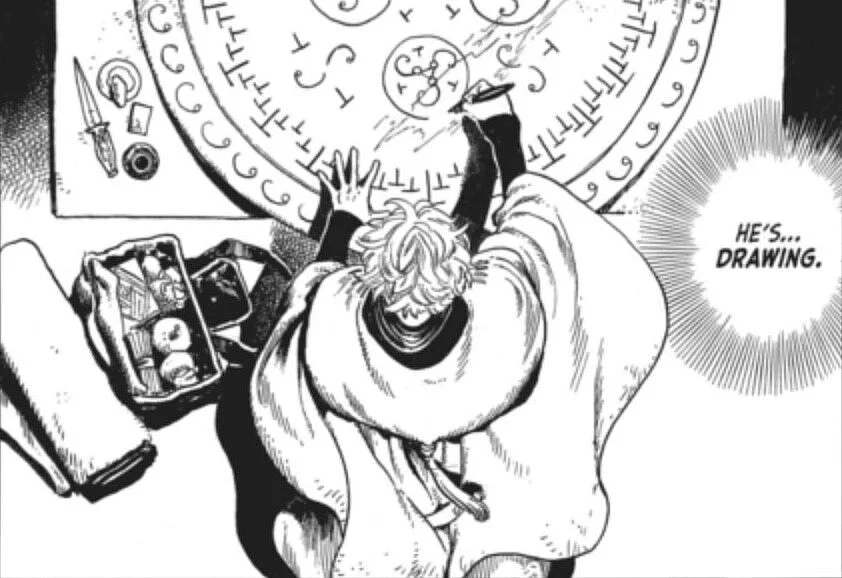
We aren't dealing with incanted or chanted spells. In this world, spells are drawn on paper, clothes, shoes, fabric, or almost any surface.
All the characters needed were the right tools, a great deal of time, and patience to make mistakes and learn from them.
On reflection, it parallels Shirahama’s art itself… You had only your pen, ink, and a piece of paper to make magic.
The magic system is complex enough that one unstable brushstroke or smudge could completely alter the entire spell, and more often than not result in some rather unfavorable outcomes. Each variation yields a different result. These endless possibilities make magic feel infinite, much like mathematics.
It’d be easy to take one look at the plot and argue that if the concept of drawn magic has been used before, what makes this anime so special? But it really isn't so much about the magic system being original. It's ultimately the way the anime executes that idea through its characters, pacing, and visual storytelling.
There are multiple solutions to one problem, and each character interacts with the same spell in their own way.
You aren’t just drawing your way out of trouble. You have a short window to combine both deep and creative thinking to come up with the best possible solution out of many.
A good witch in this world can't afford to be rash, lazy, or sloppy. Decisions have repercussions that could haunt their conscience for life.
That makes the viewer feel existential dread as much as whimsy. And that, to me, is the plumb line for a 5-star anime. And judging by the high ratings and how well people have received it so far, this could easily be the fantasy anime of the year.
As a new fan, I haven’t yet found any flaws that would raise my alarm bells.
Nonetheless, I’ll give myself time to explore the manga some more, and maybe write a follow-up on what I discover.
I could only hope that the anime adaptation keeps this same level of quality for the rest of the season and any future seasons to come.
If you want to catch the anime, it’s currently airing weekly on Crunchyroll, and is expected to run for 13 episodes, with the finale scheduled for June 22, 2026.
We’ve had no shortage of similar tropes over the years, with the likes of Hunter x Hunter, My Hero Academia, Mashle, and Black Clover dominating the screen as some major fan-favorites.
At first glance, Kamome Shirahama’s Witch Hat Atelier seems to be cut from the same cloth.
The story follows Coco, a seamstress’s daughter who dreams of becoming a witch. When Coco meets Qifrey, a mysterious traveling magician, she discovers the secret behind how magic actually works, completely changing her life and worldview. Qifrey takes Coco in as an apprentice at his atelier, where she begins practicing magic alongside other young witches.
The anime adaptation, which premiered on Crunchyroll on April 6, is quickly winning over even the most scrutinizing fans of the manga.
Newer fans, meanwhile, keep comparing it to Mushishi and Frieren, or even Kiki’s Delivery Service by Studio Ghibli.
I understand the comparison has more to do with “the vibe” of the anime than the plot itself, but as a new fan myself, I think it flattens what makes Witch Hat Atelier its own thing.
Before I go deeper into the story narrative, let’s first take a look at the visuals.
Though I haven’t yet had the chance to read the manga, I have flipped through its pages and was completely starstruck by Shirahama’s art. Every single panel feels worthy of some version of the Louvre, so it’s no wonder established fans were worried about whether the anime adaptation could measure up.
Thankfully, Bug Films delivered by staying as faithful as possible to the original art style while using hand-drawn 2D animation and 3D CGI, without overdoing the latter. We all know how poorly executed CGI (callback to the notorious 2016-2017 anime adaptation of Berserk) tends to make an anime almost unwatchable. So the studio seems to have avoided that risk by a mile.
On a side note, anime-watchers who prefer more mature-looking characters might not get into the show as easily, given that the main cast largely comprises diminutive, childlike characters.
That said, I now want to examine what makes Witch Hat Atelier land so differently from other stories with a similar setup.
Magic Requires the Hand of a Surgeon and the Patience of an Artist
A less creative mangaka may have made the magic system as predictable as possible… Magic is either innate, inherited, or cast through spoken incantations, as is usually seen in magic anime. Coco could have had dormant witch powers passed down from her ancestors, or she could have picked up a few incantations from Qifrey and started casting them on people.
Instead, we are thrust into a world where magic is secret knowledge that anyone can learn, given the right (or wrong) circumstances to make it accessible.
We aren't dealing with incanted or chanted spells. In this world, spells are drawn on paper, clothes, shoes, fabric, or almost any surface.
All the characters needed were the right tools, a great deal of time, and patience to make mistakes and learn from them.
On reflection, it parallels Shirahama’s art itself… You had only your pen, ink, and a piece of paper to make magic.
The magic system is complex enough that one unstable brushstroke or smudge could completely alter the entire spell, and more often than not result in some rather unfavorable outcomes. Each variation yields a different result. These endless possibilities make magic feel infinite, much like mathematics.
It’d be easy to take one look at the plot and argue that if the concept of drawn magic has been used before, what makes this anime so special? But it really isn't so much about the magic system being original. It's ultimately the way the anime executes that idea through its characters, pacing, and visual storytelling.
There are multiple solutions to one problem, and each character interacts with the same spell in their own way.
You aren’t just drawing your way out of trouble. You have a short window to combine both deep and creative thinking to come up with the best possible solution out of many.
A good witch in this world can't afford to be rash, lazy, or sloppy. Decisions have repercussions that could haunt their conscience for life.
That makes the viewer feel existential dread as much as whimsy. And that, to me, is the plumb line for a 5-star anime. And judging by the high ratings and how well people have received it so far, this could easily be the fantasy anime of the year.
As a new fan, I haven’t yet found any flaws that would raise my alarm bells.
Nonetheless, I’ll give myself time to explore the manga some more, and maybe write a follow-up on what I discover.
I could only hope that the anime adaptation keeps this same level of quality for the rest of the season and any future seasons to come.
If you want to catch the anime, it’s currently airing weekly on Crunchyroll, and is expected to run for 13 episodes, with the finale scheduled for June 22, 2026.
 +2
+2 9
Comments
Log in to join the discussion
No comments yet. Be the first to share your thoughts!