

Denis Villeneuve

Denis Villeneuve

Canadian director of ambitious science fiction films, including Arrival and Blade Runner 2049

Director
Canadian October 3, 1967 in Gentilly, Quebec, Canada 59 years old Active 1994 - present
Tome
From the editors, by Tome Updated on 09/05/2026

Few directors working today treat science fiction with the same philosophical seriousness as Denis Villeneuve, turning genre spectacle into genuine inquiry about time, language, and what it means to be human.

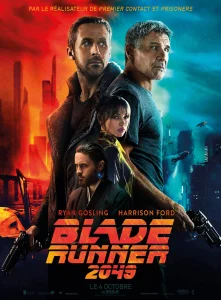
Denis Villeneuve is a Quebec-born filmmaker who has become one of the most distinctive voices in contemporary science fiction cinema. Known internationally for Arrival and Blade Runner 2049, he occupies a rare position: a director whose films perform at scale while refusing to simplify the ideas that drive them. His work sits in the tradition of literary science fiction, the kind that uses the future to ask questions the present cannot quite articulate.

Background and Influences

Villeneuve built his reputation first in French-language Canadian cinema, where he developed a rigorous, patient approach to storytelling before moving toward larger international productions. His career arc is unusual: he earned critical respect through intimate, psychologically dense films before Hollywood handed him some of the genre's most beloved properties. The transition never felt like a compromise. If anything, the bigger the canvas, the more deliberate his compositions became, suggesting influences closer to Tarkovsky or Kubrick than to the blockbuster tradition he now operates within.

Style and Themes

Silence is a recurring tool in his films. Villeneuve understands that what a scene withholds can carry more weight than what it shows, and his pacing reflects that conviction. Language and communication surface repeatedly as central preoccupations, most explicitly in Arrival, where the mechanics of how we speak shape how we perceive reality itself.


Visually, he favors vast, almost oppressive environments that make human figures look fragile, not heroic. The emotional register is consistently contemplative, even when the stakes are enormous.

Legacy and Influence

His adaptation of Blade Runner 2049 is widely considered one of the most respectful and creatively ambitious sequels in science fiction film history, a work that expanded its source material rather than simply revisiting it. With his ongoing adaptation of Frank Herbert's Dune, he has demonstrated that dense, idea-heavy science fiction can find a mass audience without being diluted. For a generation of filmmakers, he represents proof that the genre can carry genuine artistic ambition.

Who Should Explore Their Work

Viewers who find most science fiction too loud or too shallow will feel at home here. His films reward patience and a willingness to sit with unresolved questions rather than demand clean answers. Fans of authors like Ted Chiang or Ursula K. Le Guin, writers who treat speculative premises as philosophical instruments, will recognize a kindred sensibility on screen.

Best movies ranking by Denis Villeneuve

2

Related News 1

Compete in the Heroes' Tournament and win Amazon gift cards! Discover