
From the editors, by Tome Updated on 27/02/2026 Genes and Dreams: The Dystopian Vision of "Gattaca"
In a future not too distant, biology is destiny,or so dictates the world of Gattaca. Released in 1997, this film paints a chilling picture of genetic discrimination that feels both disturbingly prescient and intimately human. Critically acclaimed, it's been lauded for its provocative exploration of eugenics, a theme that resonates even more today.
The Pitch
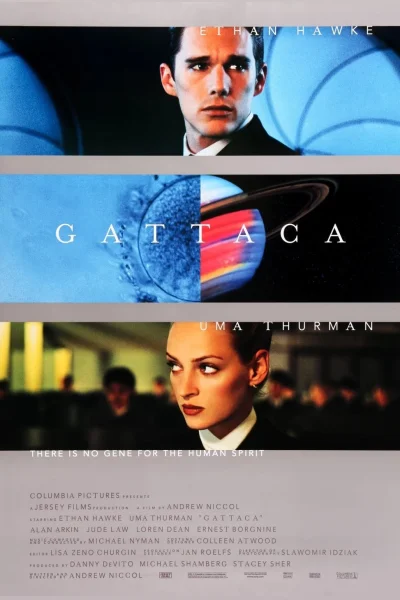
At the heart of Gattaca is Vincent Freeman, portrayed by the intense Ethan Hawke, a man born naturally in a society obsessed with genetic perfection. As an "in-valid," he's doomed to menial jobs; yet Vincent dreams of space travel. His quest sees him assume a new identity, enlisting the help of Jerome Morrow (played by Jude Law), whose own genetic gifts have gone tragically underutilized. As he defies societal constraints, the stakes climb when a murder investigation threatens to expose him.
Direction and Visual Universe
Andrew Niccol, in his directorial debut, crafts a sleek yet sterile world that mirrors the film’s themes. The art direction employs minimalist sets bathed in muted tones to evoke a sense of clinical detachment. The haunting score by Michael Nyman complements this mood perfectly, underscoring moments of tension with melancholic elegance. Alongside Hawke and Law, Uma Thurman adds depth and charisma as Irene Cassini, navigating her own challenges within this rigid hierarchy.
Who Should Watch This
A must-watch for fans of cerebral science fiction and dystopian futures, Gattaca offers 106 minutes of thought-provoking cinema. It doesn't belong to any saga or franchise but stands alone as an eerie exploration of identity and ambition. Be prepared for some philosophical introspection,the film poses uncomfortable questions about our future that linger long after the credits roll.

Comments
Log in to join the discussion
No comments yet. Be the first to share your thoughts!