Saint Seiya

Cosmic armor, stubborn hearts: why Saint Seiya still hits
Steel turns to starlight, and suddenly “holy” becomes a tactical problem. In Saint Seiya, you don’t just watch heroes win fights. You watch them negotiate fate with their bodies, one scraped knee and one cracked heartbeat at a time. It’s the kind of series that made armored combat feel mythic, then made myth feel like a street-level obsession for fans who argued about techniques like they were politics.
Masami Kurumada launched the series in Weekly Shonen Jump, and the cultural fingerprint it left is impossible to ignore. Across decades, Saint Seiya became a reference point for how shonen action can borrow from classical mythology while escalating into full-on spectacle. Fans often remember it for its emotional punches as much as its power climbs, and that mix is part of why the franchise refuses to stay in the past.
The Story
Seiya, a determined fighter, steps into a universe where gods, omens, and weapons tied to constellations decide who deserves to survive. He and other Bronze Saints fight against escalating threats in a conflict that feels both cosmic and personal, because every victory comes with a cost. The tone is relentlessly action-forward, but it keeps slipping in stubborn humor, raw drama, and sudden quiet grief between the clashes. The stakes are simple to name, harder to live with: protect those you love, even if the cosmos treats you like disposable fuel.
Visual and Narrative Identity
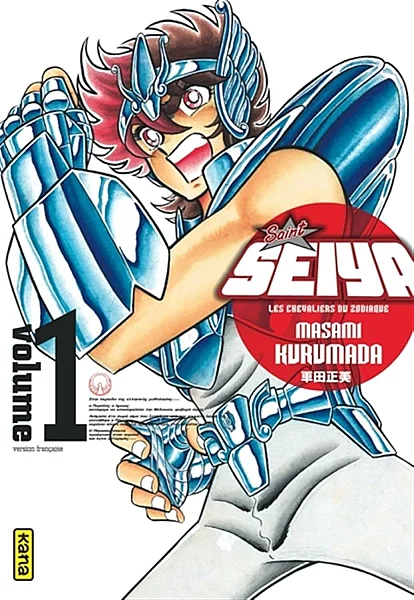
Kurumada’s style leans into sharp physiques, dramatic expressions, and poses that look choreographed for impact. Panels often feel built for momentum, with clear staging that makes even impossible attacks readable. The narration also has a rhythm: big visual statements, then immediate consequences, then another escalation that dares you to keep up. If later manga “systematize” power fantasy, Saint Seiya still carries that older muscle, where intensity is the design principle and determination is the real magic.
Who Should Read This
If you like high-intensity shonen battle manga, myth-flavored settings, and emotional stakes that refuse to stay tidy, this is your lane. You’ll want to tolerate frequent violence, dramatic injuries, and themes that can turn bleak even when the series is cheering for hope. Reading prerequisites are minimal, but patience helps: the story often accelerates hard, and it rewards you for staying curious through the big turns.
Cosmic armor, stubborn hearts: why Saint Seiya still hits
Steel turns to starlight, and suddenly “holy” becomes a tactical problem. In Saint Seiya, you don’t just watch heroes win fights. You watch them negotiate fate with their bodies, one scraped knee and one cracked heartbeat at a time. It’s the kind of series that made armored combat feel mythic, then made myth feel like a street-level obsession for fans who argued about techniques like they were politics.
Masami Kurumada launched the series in Weekly Shonen Jump, and the cultural fingerprint it left is impossible to ignore. Across decades, Saint Seiya became a reference point for how shonen action can borrow from classical mythology while escalating into full-on spectacle. Fans often remember it for its emotional punches as much as its power climbs, and that mix is part of why the franchise refuses to stay in the past.
The Story
Seiya, a determined fighter, steps into a universe where gods, omens, and weapons tied to constellations decide who deserves to survive. He and other Bronze Saints fight against escalating threats in a conflict that feels both cosmic and personal, because every victory comes with a cost. The tone is relentlessly action-forward, but it keeps slipping in stubborn humor, raw drama, and sudden quiet grief between the clashes. The stakes are simple to name, harder to live with: protect those you love, even if the cosmos treats you like disposable fuel.
Visual and Narrative Identity
Kurumada’s style leans into sharp physiques, dramatic expressions, and poses that look choreographed for impact. Panels often feel built for momentum, with clear staging that makes even impossible attacks readable. The narration also has a rhythm: big visual statements, then immediate consequences, then another escalation that dares you to keep up. If later manga “systematize” power fantasy, Saint Seiya still carries that older muscle, where intensity is the design principle and determination is the real magic.
Who Should Read This
If you like high-intensity shonen battle manga, myth-flavored settings, and emotional stakes that refuse to stay tidy, this is your lane. You’ll want to tolerate frequent violence, dramatic injuries, and themes that can turn bleak even when the series is cheering for hope. Reading prerequisites are minimal, but patience helps: the story often accelerates hard, and it rewards you for staying curious through the big turns.
Where to buy
 Buy on Amazon
 Also in the Saint Seiya universe
Reviews
Login to share your review
No reviews yet. Be the first to share your thoughts!