Deadman Wonderland

Red Ink, Dead Air: Why Deadman Wonderland Still Hits
The first image that sticks is the absurdly cheerful violence: a boy framed as entertainment while his blood becomes a kind of currency. Deadman Wonderland turns that contradiction into an engine, spitting out action with a sickly sweet grin and then snapping into dread. Even after multiple adaptations and reappraisals in pop culture, the series keeps its most memorable trick: it makes cruelty feel like a theme park, complete with rules you learn too late.
Jinsei Kataoka and Kazuma Kondou build the manga around a premise that reads like a tabloid and plays like a survival thriller. It has the energy of something serialized in hungry installments, where every chapter ends on a new bruise.
The Story
After an atrocity he cannot explain, the protagonist gets trapped in a brutal prison called Deadman Wonderland, where “justice” is staged for an audience. He fights to stay alive, but the real tension comes from the way the system extracts meaning from suffering and then calls it entertainment. The tone swings between high-octane action and paranoid psychological drama, with flashes of dark humor that make the suspense sharper instead of lighter. Every win feels temporary, because the stakes are not only survival, they are identity.
Visual and Narrative Identity
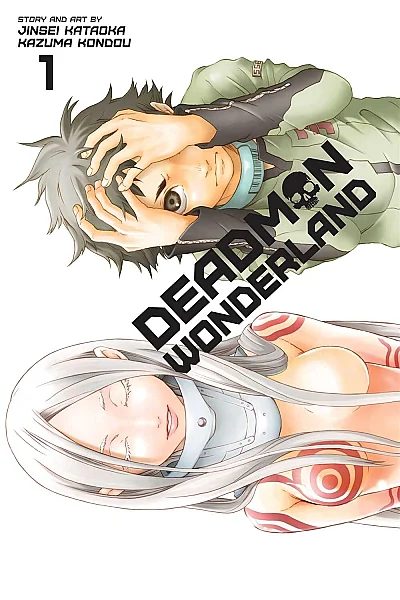
The art leans on expressive faces and striking contrast, using detail like it is part of the trap. Action sequences move with a jagged rhythm, then abruptly slow when the story wants you to feel the room closing in. Panel composition often treats violence as spectacle, which is exactly the point: the manga visually reinforces how the prison commodifies pain. The pacing also has that serialized bite, where momentum stays hot even when the emotions cool into dread.
Who Should Read This
If you like dystopian action, prison survival stories, and manga that weaponize shock value with narrative intent, this one fits your shelf. It is a mature read, with graphic violence and heavy themes that will not politely tap you on the shoulder. Note: if you want something purely comedic, look elsewhere, because the laughter here comes with a price tag attached.
Red Ink, Dead Air: Why Deadman Wonderland Still Hits
The first image that sticks is the absurdly cheerful violence: a boy framed as entertainment while his blood becomes a kind of currency. Deadman Wonderland turns that contradiction into an engine, spitting out action with a sickly sweet grin and then snapping into dread. Even after multiple adaptations and reappraisals in pop culture, the series keeps its most memorable trick: it makes cruelty feel like a theme park, complete with rules you learn too late.
Jinsei Kataoka and Kazuma Kondou build the manga around a premise that reads like a tabloid and plays like a survival thriller. It has the energy of something serialized in hungry installments, where every chapter ends on a new bruise.
The Story
After an atrocity he cannot explain, the protagonist gets trapped in a brutal prison called Deadman Wonderland, where “justice” is staged for an audience. He fights to stay alive, but the real tension comes from the way the system extracts meaning from suffering and then calls it entertainment. The tone swings between high-octane action and paranoid psychological drama, with flashes of dark humor that make the suspense sharper instead of lighter. Every win feels temporary, because the stakes are not only survival, they are identity.
Visual and Narrative Identity
The art leans on expressive faces and striking contrast, using detail like it is part of the trap. Action sequences move with a jagged rhythm, then abruptly slow when the story wants you to feel the room closing in. Panel composition often treats violence as spectacle, which is exactly the point: the manga visually reinforces how the prison commodifies pain. The pacing also has that serialized bite, where momentum stays hot even when the emotions cool into dread.
Who Should Read This
If you like dystopian action, prison survival stories, and manga that weaponize shock value with narrative intent, this one fits your shelf. It is a mature read, with graphic violence and heavy themes that will not politely tap you on the shoulder. Note: if you want something purely comedic, look elsewhere, because the laughter here comes with a price tag attached.
Where to buy
 Buy on Amazon
 Reviews
Login to share your review
No reviews yet. Be the first to share your thoughts!