The Shadow Kings and the Art of Being Almost Invisible
Kuroko’s Basket plays a very specific kind of mind game with you. One minute the court looks like any other shonen battlefield, the next minute a blink becomes a weapon and a “minor” player steals the whole frame. There’s a reason fans quote those moments where timing beats talent, because the series turns spacing, misdirection, and teamwork into suspense you can feel in your throat.
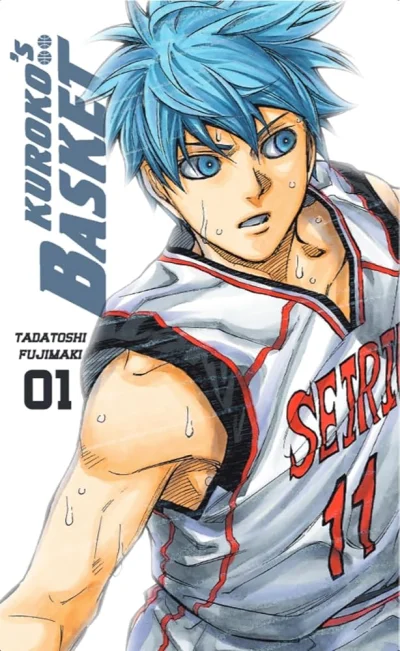
Created by Tadatoshi Fujimaki, the manga helped define a certain late-2000s sports energy: hyper-competent youth, technical spectacle, and rivals who feel like walking tactical problems. It’s also one of those franchises that crossed platforms smoothly, with an anime adaptation that amplified the speed and intensity of its basketball action.
The Story
Seirin High’s basketball team fights uphill after losing their best shot at glory. Their secret weapon is Kuroko, a player whose presence feels like a rumor, paired with Taiga Kagami, a powerhouse who reads the game like a fight choreography. The tournament structure keeps upping the stakes, but what makes it addictive is the way each opponent represents a different basketball “language.” The tone stays loud and competitive, with plenty of humor, occasional heat-soaked drama, and action that treats fundamentals like magic.
Visual and Narrative Identity
Fujimaki’s art emphasizes motion and impact, with paneling that stretches attention at the exact moment your eyes should chase the ball. He uses sharp facial expressions and dense action lines to sell speed without confusing the court layout, which is harder than it sounds in a fast sport manga. The narrative identity is equally distinct: abilities feel concrete, but the real trick is how characters communicate through positioning and anticipation. Pacing stays relentless, then slows just long enough for you to realize the “invisible” play was never a fluke.
Who Should Read This
If you like sports stories where strategy matters as much as stamina, you’ll probably devour Kuroko’s Basket. You do not need basketball knowledge, but you should be comfortable with stylized, heightened action and power fantasy mechanics. Expect competitive rivalry, high-intensity fights, and some rivalry-driven emotional sting, though it stays within typical shonen territory for violence and maturity.



Comments
Log in to join the discussion
No comments yet. Be the first to share your thoughts!