Ender's Game
The novel is taught in military academies and its author has spent decades arguing with the readers it gained. Ender's Game presents the training of a child soldier so persuasively that the United States Marine Corps put it on a reading list, and the book's own ending is a condemnation of everything that led to it.
1985: a short story expanded into an argument
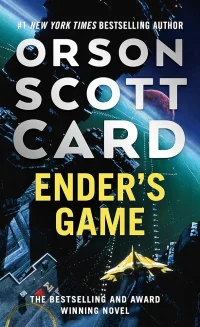
Orson Scott Card published Ender's Game as a novelette in 1977 and rewrote it as a novel to set up a sequel he wanted to write instead.
The premise is a battle school in orbit where children are trained through games. Ender is six when he arrives and is manipulated by every adult around him, deliberately and continuously.
It won both the Hugo and the Nebula awards, and Speaker for the Dead did the same the following year, which no author had achieved with consecutive novels before.
A book adopted by the institution it examines
The Marine Corps added it to its professional reading list, and it has been used in leadership courses to discuss command isolation and the ethics of orders.
The novel's final act reveals that the last training exercise was the real war, and that the children have committed genocide without being told. Card's subject is the cost of that deception.
The novel has sold several million copies and is set in school curricula in several countries. A book can be read for its tactics or for its argument. This one is read for both, by readers who disagree about which is the point.
Ender's Shadow tells the same events from another desk
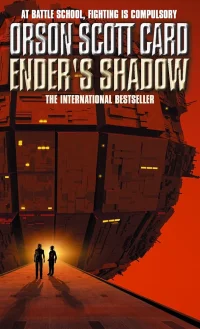
Card published Ender's Shadow in 1999, a parallel novel following Bean, a minor character from the original, through the identical timeline and the same battles.
The two books can be read in either order and contradict each other on small points, which Card has acknowledged as deliberate: two witnesses to the same events do not agree.
The approach produced a second series of sequels, and the wider sequence now runs past fifteen volumes across two parallel timelines.
The film arrived after the argument had moved on
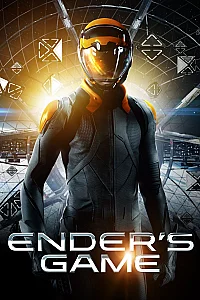
Ender's Game reached cinemas in 2013, nearly thirty years after publication, with Harrison Ford and a budget near 110 million dollars.
It was met by an organised boycott over Card's public opposition to same-sex marriage, and it took about 125 million worldwide, which for that budget is a loss.
No sequel was made. A novel about children whose actions are separated from their understanding was adapted at the exact moment its author's positions had become inseparable from it.
All works
No work matches this filter.