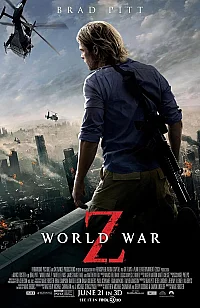
World War Z: An Oral History of the Zombie War
The Apocalypse, Told in Depositions
Structured as a series of survivor interviews compiled after a global zombie war, this novel does something most genre fiction refuses to do: it slows down. Where other horror narratives sprint toward the next scare, Max Brooks lingers on bureaucratic failure, military doctrine, and the quiet psychology of people who outlasted catastrophe.
The oral history format is the book's sharpest formal choice. Each testimony carries a distinct voice, a distinct national context, and a distinct theory of why humanity nearly lost. The result reads less like horror and more like a geopolitical autopsy.
The Story
A United Nations researcher travels the world in the aftermath of a zombie pandemic, gathering firsthand accounts from soldiers, politicians, survivors, and refugees. There is no single protagonist, only a mosaic of perspectives spanning continents and social strata. The central question is not whether humanity survives, but how, and at what cost.
Brooks draws on his background as a student of military history and political science, and the book's most unsettling passages are not the combat scenes but the ones depicting institutional paralysis in the early days of the outbreak.
Who Should Read This
Readers who find traditional zombie fiction too thin on ideas will find this considerably more rewarding. The episodic structure makes it easy to read in fragments, though the cumulative effect rewards patience. Those sensitive to depictions of mass death, civilian casualties, and wartime trauma should approach with that in mind.
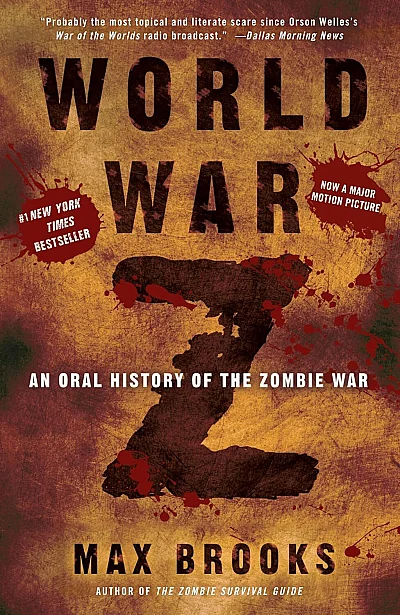
The Apocalypse, Told in Depositions
Structured as a series of survivor interviews compiled after a global zombie war, this novel does something most genre fiction refuses to do: it slows down. Where other horror narratives sprint toward the next scare, Max Brooks lingers on bureaucratic failure, military doctrine, and the quiet psychology of people who outlasted catastrophe.
The oral history format is the book's sharpest formal choice. Each testimony carries a distinct voice, a distinct national context, and a distinct theory of why humanity nearly lost. The result reads less like horror and more like a geopolitical autopsy.
The Story
A United Nations researcher travels the world in the aftermath of a zombie pandemic, gathering firsthand accounts from soldiers, politicians, survivors, and refugees. There is no single protagonist, only a mosaic of perspectives spanning continents and social strata. The central question is not whether humanity survives, but how, and at what cost.
Brooks draws on his background as a student of military history and political science, and the book's most unsettling passages are not the combat scenes but the ones depicting institutional paralysis in the early days of the outbreak.
Who Should Read This
Readers who find traditional zombie fiction too thin on ideas will find this considerably more rewarding. The episodic structure makes it easy to read in fragments, though the cumulative effect rewards patience. Those sensitive to depictions of mass death, civilian casualties, and wartime trauma should approach with that in mind.
Where to buy
Also in the World War Z universe
Reviews
Login to share your review
My favorite zombie novel by far
Comments
Log in to join the discussion
No comments yet. Be the first to share your thoughts!
Comments
Log in to join the discussion
No comments yet. Be the first to share your thoughts!