Deadpool
Fox refused to make the film for eleven years. Test footage leaked in July 2014, the response was large enough to be measured, and the studio greenlit it within weeks. The result took 782 million dollars on a 58 million budget and made restricted-rating superhero films a category.
A character created as a joke about a rival
Rob Liefeld and Fabian Nicieza introduced Deadpool in 1991 as a mercenary in a red suit, closely modelled on Deathstroke from DC. The joke is in the name: Slade Wilson became Wade Wilson.
The parody stuck, and later writers made the character aware that he is in a comic. He argues with narration boxes and refers to his own sales figures.
That device is difficult to film, which is a large part of why the project sat unmade for a decade. A first attempt put the character in a 2009 Wolverine film with his mouth sewn shut, which is the opposite of the joke.
A leak that functioned as market research
Tim Miller and Ryan Reynolds produced test footage in 2012 to persuade Fox. The studio was unconvinced, and the footage appeared online in 2014 without authorisation.
Reynolds has said he does not know who leaked it. The reaction gave Fox the audience evidence it had been asking for, and production started that year with a budget well below the standard for the genre.
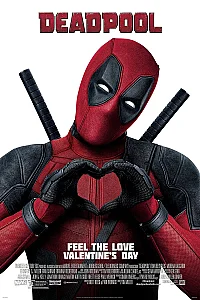
Deadpool opened in February 2016 and became the highest-grossing restricted-rating film released to that point, a record it held until its own sequel's successor took it.
Two sequels and a studio acquisition
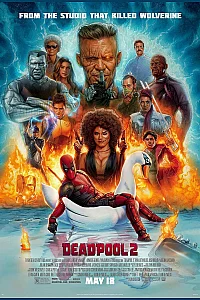
Deadpool 2 followed in 2018 with a larger budget and the same register. Disney then bought Fox in 2019, which placed a character built on obscenity inside a company that does not make obscene films.
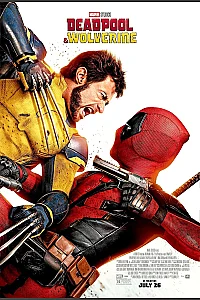
The answer took five years. Deadpool and Wolverine arrived in 2024 as a Marvel Studios production, kept its rating, and took more than 1.3 billion dollars.
It is now the highest-grossing restricted-rating film ever released, which settles an argument the industry had been having since 2016 about whether the rating limits the audience.
What the rating actually changed
Before 2016, the accepted rule was that superhero films must be watchable by children, because children buy the toys. Deadpool demonstrated that an adult audience exists and pays.
Warner released a restricted cut of a Justice League film, and several studios repositioned projects. Most of the imitators failed, because the rating was the visible part of the formula and not the reason it worked.
The reason it worked is narrower: a parody only functions while the thing it mocks is still taking itself seriously, and Deadpool has spent a decade depending on the sincerity of films made by the company that now owns him.
All works
No work matches this filter.