
Traduit depuis Anglais
Romance entre les vivants et les morts
Quand les dieux pèsent l'équilibre des vies entre les mains des mortels et des enfants pour présider
8
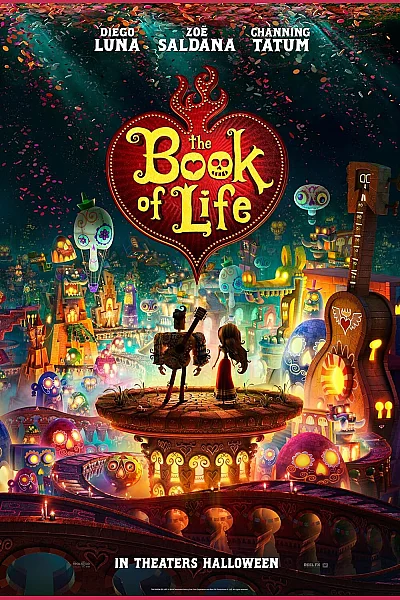

The Book of Life Trailer

The first thing you notice is the way the film treats color like a plot device. Festival-bright towns, skeletal flourishes, and mythic architecture don’t just look pretty. They feel like a promise: this world will reward your attention, not your patience. And that’s rare in animation where “vibe” often replaces consequence.
“The Book of Life” follows Manolo, a spirited young man caught between duty, romance, and the pull of legend. His life intersects with the supernatural trial of the afterlife, where three realms keep score of who you are and who you choose to become. The conflict is basically character geometry: two paths that look like destiny, one choice that reveals the real driver. The film is an original story with its own mythology, rather than a direct adaptation from a single earlier book or manga.
This is a high-energy CGI animated feature with a hand-painted sensibility in the way it frames faces and textures. The production leans on crisp linework and painterly color layering, so emotions land fast: joy pops, dread creeps, grief sits heavy. The visual identity is tightly linked to cultural motifs, especially Mexican festival imagery and Day of the Dead iconography, used with care and theatrical punch. Music and sound design keep the film moving, switching between buoyant rhythms and quieter, emotionally sharper cues.
This movie works best for viewers who like stories where heartbreak and humor share the same stage. It’s accessible for kids, but it also gives adults enough interiority to justify a second viewing after the credits. Runtime is about 1 hour and 40 minutes, and the tone stays family-friendly, with a few scary-afterlife moments that never lose their playful, theatrical framing. No franchise baggage, just a complete story built to stand on its own.
The first thing you notice is the way the film treats color like a plot device. Festival-bright towns, skeletal flourishes, and mythic architecture don’t just look pretty. They feel like a promise: this world will reward your attention, not your patience. And that’s rare in animation where “vibe” often replaces consequence.
“The Book of Life” follows Manolo, a spirited young man caught between duty, romance, and the pull of legend. His life intersects with the supernatural trial of the afterlife, where three realms keep score of who you are and who you choose to become. The conflict is basically character geometry: two paths that look like destiny, one choice that reveals the real driver. The film is an original story with its own mythology, rather than a direct adaptation from a single earlier book or manga.
This is a high-energy CGI animated feature with a hand-painted sensibility in the way it frames faces and textures. The production leans on crisp linework and painterly color layering, so emotions land fast: joy pops, dread creeps, grief sits heavy. The visual identity is tightly linked to cultural motifs, especially Mexican festival imagery and Day of the Dead iconography, used with care and theatrical punch. Music and sound design keep the film moving, switching between buoyant rhythms and quieter, emotionally sharper cues.
This movie works best for viewers who like stories where heartbreak and humor share the same stage. It’s accessible for kids, but it also gives adults enough interiority to justify a second viewing after the credits. Runtime is about 1 hour and 40 minutes, and the tone stays family-friendly, with a few scary-afterlife moments that never lose their playful, theatrical framing. No franchise baggage, just a complete story built to stand on its own.
Connectez-vous pour donner votre avis

Connectez-vous pour participer


Connectez-vous pour participer

Commentaires
Connectez-vous pour participer
No comments yet. Be the first to share your thoughts!